
DZIENNIK BODDY
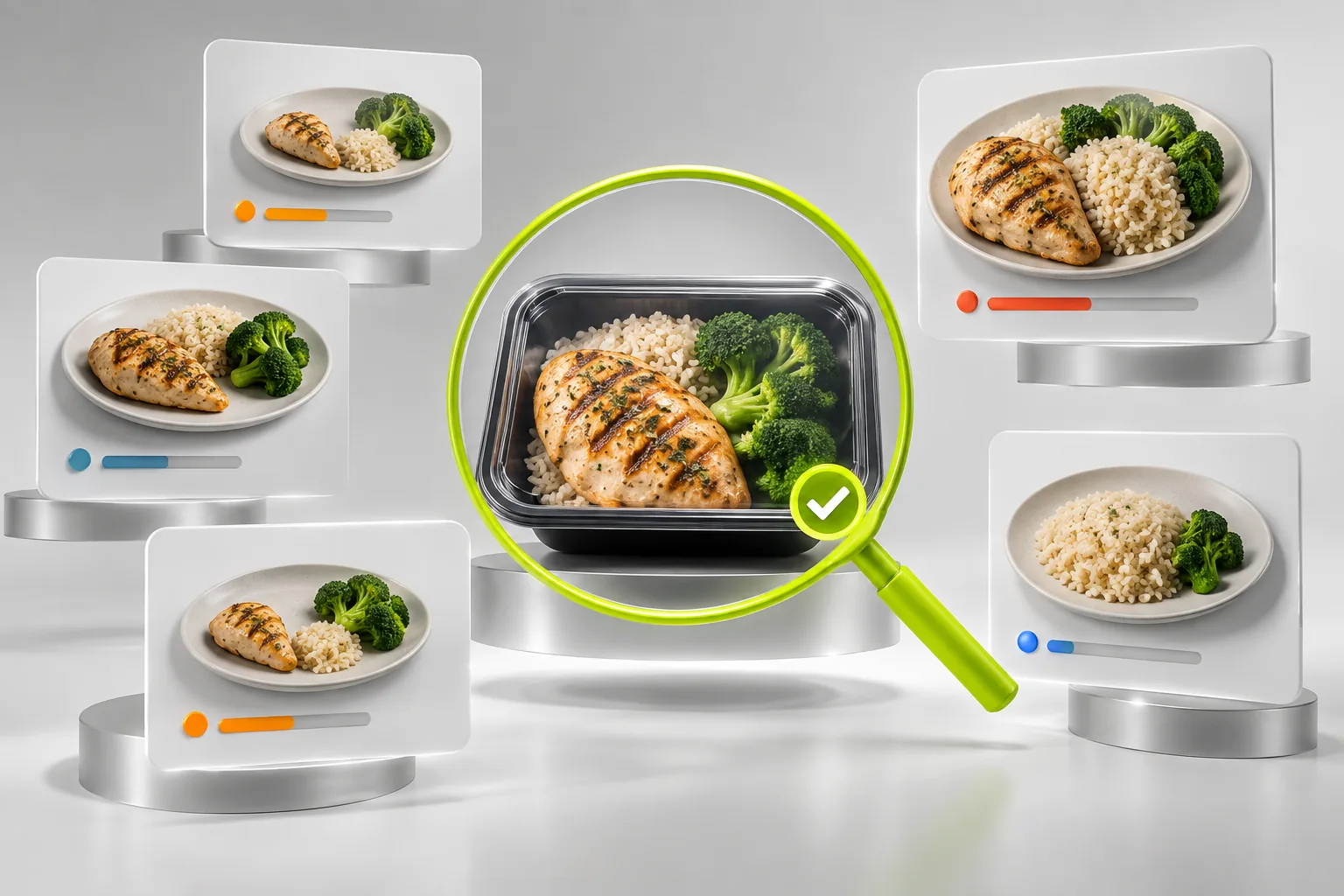
How Can You Spot Errors in a Calorie App’s Food Database?
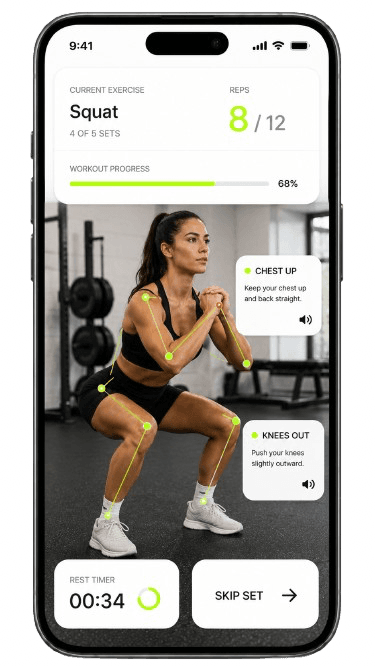
BODDY W DZIAŁANIU
Trening w czasie rzeczywistym na iPhonie, którego już używasz.
Boddy śledzi obsługiwane ruchy, liczy powtórzenia oraz przekazuje krótkie wskazówki wizualne i głosowe podczas serii.

Direct answer: Check the serving unit, calories, macros, brand, and label date before trusting a database entry. Prefer verified manufacturer or authoritative food-composition records, and remember that two listings with the same name may represent different portions or recipes.
This guide is based on recurring patterns in recent App Store reviews, public community discussions, official product documentation, and relevant research. Individual reports do not prove that every user will experience the same problem, but repeated complaints reveal where a fitness product needs clearer design and safer defaults.
The complaint behind the question
Nutrition-app users regularly find duplicates with conflicting calories, public entries whose macros do not add up, and serving sizes that silently switch between grams, pieces, and prepared volume. Fast search can make the wrong entry easier to choose repeatedly.
The practical standard is simple: an app should make an important fitness decision easier to understand, perform, or verify. When automation adds a polished result without showing its assumptions, users inherit the uncertainty while the software receives the credit.
Why this happens
Large consumer databases combine manufacturer data, national references, restaurant information, and user submissions. Products reformulate, labels vary by country, and a recipe name such as ‘chicken curry’ has no single nutritional identity.
Fitness apps operate with incomplete information. They may know the workout history but not the exact machine; see a camera frame but not pain; recognize a food but not its hidden oil; or receive wearable data without knowing the user’s full context. Strong products expose those limits instead of presenting every output with equal confidence.
A five-point quality check
- Compare against the package in your hand. Ask whether the app makes this condition visible and easy to correct before it affects the next recommendation.
- Use grams when practical. Ask whether the app makes this condition visible and easy to correct before it affects the next recommendation.
- Check whether calories roughly match protein, carbohydrate, and fat. Ask whether the app makes this condition visible and easy to correct before it affects the next recommendation.
- Save a corrected personal food instead of reselecting a bad entry. Ask whether the app makes this condition visible and easy to correct before it affects the next recommendation.
- Treat restaurant and mixed-dish estimates as ranges. Ask whether the app makes this condition visible and easy to correct before it affects the next recommendation.
Run this check using a real session, not a marketing screenshot. Set up the equipment you normally use, interrupt the expected flow once, and inspect what is saved afterward. Reliability appears in recovery from ordinary messiness: a busy gym, a changed exercise, a weak connection, or an imperfect meal.
A safer decision rule
Fix recurring staple foods first because small daily errors compound. For occasional meals, a reasonable estimate may be enough. Precision should match the decision you are trying to make, not the number of decimals the app displays.
The important distinction is between assistance and authority. Software can organize evidence, recognize patterns, reduce tapping, and make a reasonable suggestion. The user still needs a visible path to inspect the evidence, change the choice, and recover from an error without losing history.
What good product behavior looks like
A trustworthy app should communicate three things at the moment they matter:
- What it observed. The exercise, set, image, sensor signal, or history used.
- What it inferred. The recommendation or classification produced from that evidence.
- What remains uncertain. Missing context, unsupported movements, weak visibility, incomplete data, or a result that needs confirmation.
This separation prevents a guess from looking like a fact. It also helps users report better feedback: instead of saying “the AI is bad,” they can identify a wrong observation, an unreasonable inference, or a missing control.
Where Boddy fits
Boddy can bring meal logging into the same fitness workflow, but database convenience does not guarantee source accuracy. Users should be able to review and correct the foods that materially influence their goals.
Boddy combines workout planning, supported phone-camera form guidance, meal logging, recovery, and progress on iPhone. That wider context is useful only when each feature stays within its real capability. Live feedback can improve the moment of a set; it does not replace sound programming, reliable records, user judgment, or qualified medical care.
A quick test before you depend on the feature
Try the feature with a low-stakes example. Compare the output with information you already know, deliberately make one correction, close and reopen the app, and confirm that the corrected result survives. Then test the edge condition most likely in your routine—different equipment, poor connectivity, partial camera visibility, a mixed meal, or a second connected device.
If the app explains the limitation, preserves your correction, and gives you control, the feature may be dependable enough for its intended job. If it silently rewrites history, hides the input, or blocks correction, the problem is not merely accuracy. It is recoverability.
Bottom line
Choose fitness technology that behaves predictably when the real world is inconvenient. The most useful AI is not the one that produces the most outputs. It is the one that reduces friction while making uncertainty, control, and safety easier to see.
Sources checked in September 2026
BODDY W DZIAŁANIU
Trening w czasie rzeczywistym na iPhonie, którego już używasz.
Boddy śledzi obsługiwane ruchy, liczy powtórzenia oraz przekazuje krótkie wskazówki wizualne i głosowe podczas serii.
TRENUJ Z BODDY
Chcesz coachingu, który reaguje podczas treningu?
Boddy łączy spersonalizowane plany, dziennik posiłków, śledzenie postępów i wskazówki techniczne w czasie rzeczywistym w jednej aplikacji na iPhone’a.