
THE BODDY JOURNAL
How Can You Spot Errors in a Calorie App’s Food Database?
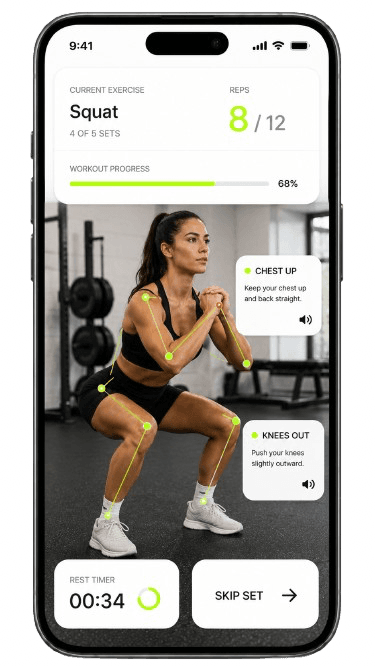
BODDY IN ACTION
Real-time coaching on the iPhone you already use.
Boddy follows supported movement, counts repetitions, and delivers concise visual and spoken cues during the set.

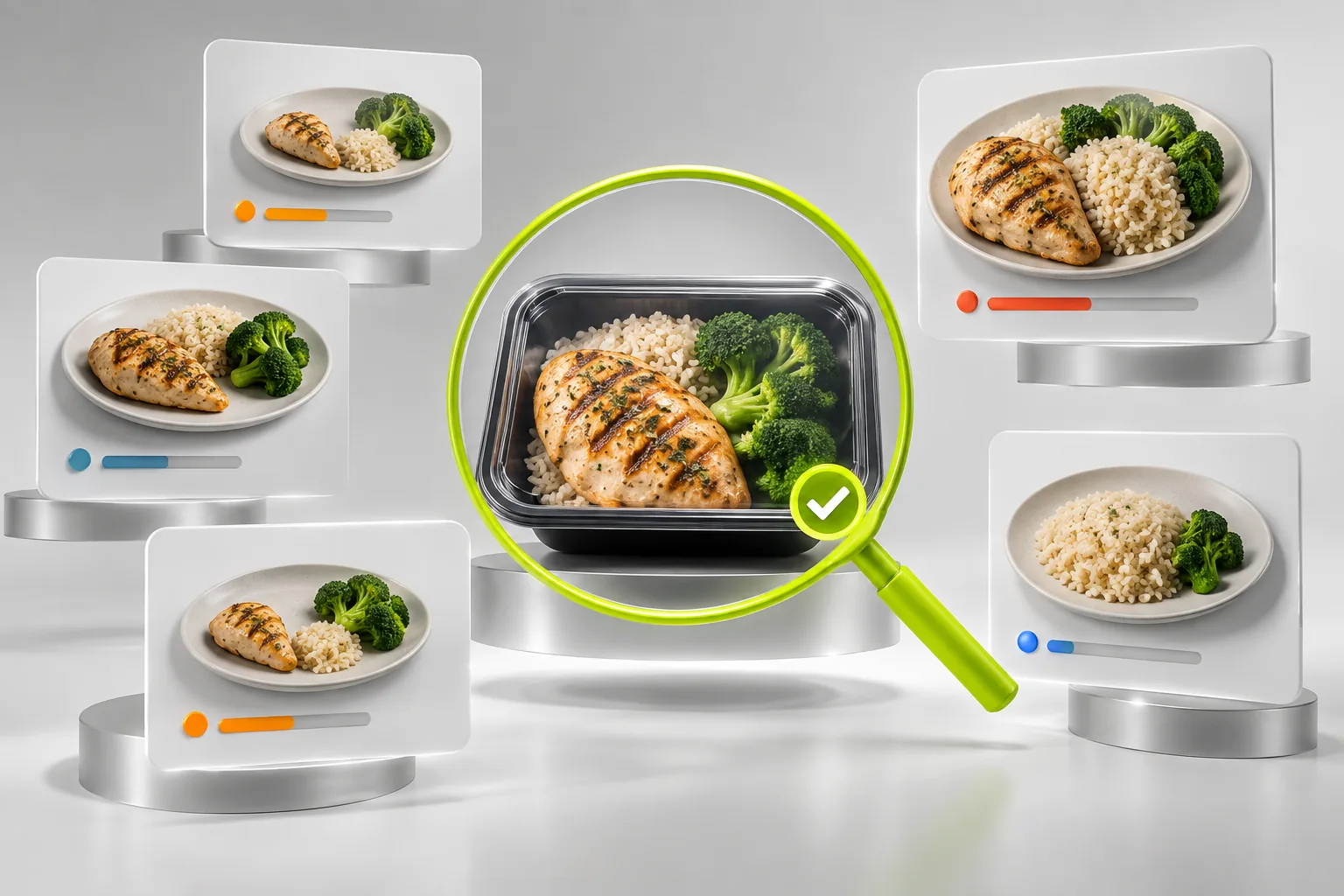
Direct answer: Check the serving unit, calories, macros, brand, and label date before trusting a database entry. Prefer verified manufacturer or authoritative food-composition records, and remember that two listings with the same name may represent different portions or recipes.
The complaint behind the question
Nutrition-app users regularly find duplicates with conflicting calories, public entries whose macros do not add up, and serving sizes that silently switch between grams, pieces, and prepared volume. Fast search can make the wrong entry easier to choose repeatedly.
Why this happens
Large consumer databases combine manufacturer data, national references, restaurant information, and user submissions. Products reformulate, labels vary by country, and a recipe name such as ‘chicken curry’ has no single nutritional identity.
A five-point quality check
- Compare against the package in your hand.
- Use grams when practical.
- Check whether calories roughly match protein, carbohydrate, and fat.
- Save a corrected personal food instead of reselecting a bad entry.
- Treat restaurant and mixed-dish estimates as ranges.
A safer decision rule
Fix recurring staple foods first because small daily errors compound. For occasional meals, a reasonable estimate may be enough. Precision should match the decision you are trying to make, not the number of decimals the app displays.
What good product behavior looks like
Food search should expose serving units, brand, preparation state, and the data source before an entry reaches the daily total. A package label and a generic database row may differ because one describes a cooked product and the other a raw ingredient. The app should let the user correct a serving or save a verified choice without silently changing past meals. Treat large discrepancies as questions to inspect, not as evidence that one number is automatically right.
Where Boddy fits
Boddy keeps meal logging beside workouts, recovery, and progress, so nutrition entries have a clear purpose inside the same fitness workflow. Users can review the foods and portions that materially influence their goals instead of treating a database result as automatically correct. The advantage is not an infallible food catalog; it is a shorter path from logging to a better-informed training and nutrition decision.
Important limit. Calories calculated from protein, carbohydrate, and fat may differ slightly from the printed label because of rounding, fiber, and local labeling rules. A mismatch is a prompt to inspect the entry, not automatic proof that it is false. Restaurant meals and mixed dishes usually remain estimates even after a database check; treat them as such rather than adding false decimal precision.
A quick test before you depend on the feature
Worked example. You scan a cereal you eat often and the app fills a 30-gram serving, but you weighed 80 grams. The database entry may be correct per serving while the logged portion is wrong. Compare the current package with the app's calories and macronutrients per 100 grams, set the consumed amount to 80 grams, and save a corrected entry if the record itself is outdated. If the same food appears multiple times with different countries or package sizes, choose the label that matches the package in your hand. Rechecking one frequent food can be more useful than scrutinizing every occasional snack.
Bottom line
Check the serving and source behind a calorie total. A corrected entry you can reuse is more useful than a fast but unverifiable match.
Sources checked in September 2026
BODDY IN ACTION
Real-time coaching on the iPhone you already use.
Boddy follows supported movement, counts repetitions, and delivers concise visual and spoken cues during the set.
TRAIN WITH BODDY
Want coaching that responds while you train?
Boddy combines personalized plans, meal logging, progress tracking, and real-time form guidance in one iPhone experience.