
THE BODDY JOURNAL
How to Count Calories in a Homemade Recipe and Meal-Prep Portions
BODDY IN ACTION
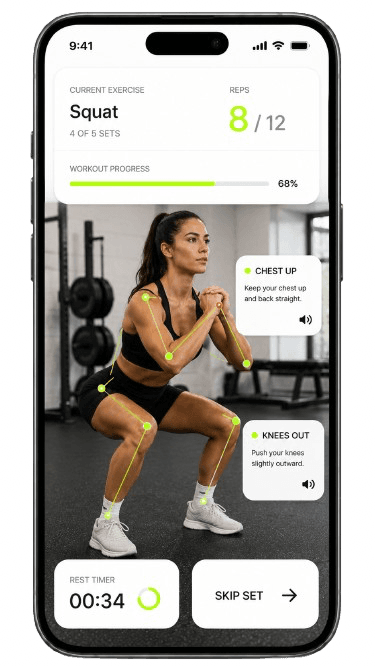
Real-time coaching on the iPhone you already use.
Boddy follows supported movement, counts repetitions, and delivers concise visual and spoken cues during the set.

Direct answer: To estimate calories in a homemade recipe, record the amounts of the ingredients you use, add their calorie values from a consistent food database or package labels, then divide the batch total by the number or weight of portions you actually serve. For meal prep, weigh the finished batch and each container when practical. The result is an estimate: ingredient labels, database entries, cooking changes, and uneven portions all introduce error.
Calculate the full batch first
Write down every calorie-containing ingredient, including oil, butter, sauces, cheese, and toppings. Use the amount that goes into the recipe—not the package’s serving size unless that is what you used. Match foods as closely as possible in a reliable database such as USDA FoodData Central, and prefer the package label for a specific branded product.
Suppose a pot contains 500 g raw chicken, 300 g dry rice, 15 g oil, vegetables, and a sauce. Look up each ingredient in the same state you measured it: dry rice with dry-rice data, raw chicken with raw-chicken data. Add the values to get the batch estimate. Cooking changes water content and batch weight; discarded drippings or cooking liquid can also change what remains in the portion. Avoid mixing a cooked-food database entry with a raw weight, because that can produce a substantial mismatch.
Then measure the cooked batch yield. If the finished pot weighs 1,800 g and has an estimated 2,700 calories, the estimate is 1.5 calories per gram. A 450 g portion would be roughly 675 calories. If you make five genuinely equal portions instead, the simple estimate is 540 calories each. These numbers demonstrate the arithmetic; actual recipe values can differ.
Portion meal prep honestly
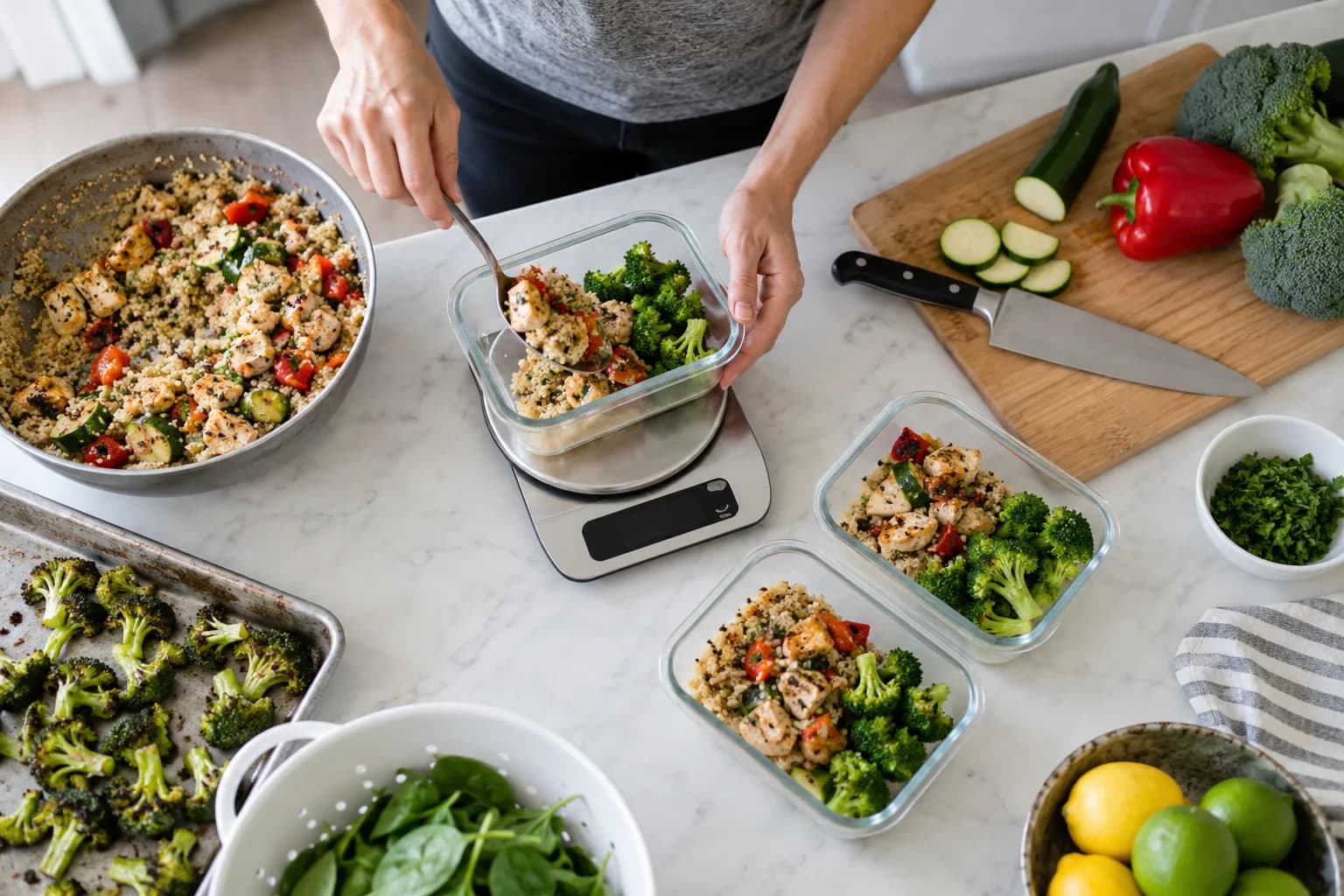
The most accurate practical method is to weigh the full cooked batch, tare a container on a kitchen scale, and weigh each serving. If the batch is mixed evenly, weight-based portions are easier to compare. If ingredients settle unevenly—such as chicken pieces in rice—stir before serving or distribute the major ingredients deliberately. Otherwise, a 450 g container may not contain the same calories as another 450 g container.
Without a scale, divide the batch into visible fractions: half the pan, four similar bowls, or six equal slices. Log the fraction actually eaten rather than assuming every container is a standard serving. For example, if a casserole is cut into eight pieces and you take one and a half, record approximately 1.5/8 of the batch. This remains approximate, but it is more transparent than assigning a generic serving size.
Save a recipe with its ingredient amounts and total yield, and give changed versions separate names. Extra oil, a different brand, or an added topping changes the estimate. Food labels use serving sizes to describe typical amounts, not to prescribe how much you should eat (FDA explanation).
Know when the estimate is good enough
Do not treat a homemade calorie number as laboratory precision. Database values are averages; produce varies; pan residue may remain; and home portions are not always equal. Consistency can make a log useful for noticing broad patterns, but it does not make every entry exact. If calorie tracking causes anxiety, rigid rules, or compensatory restriction, step back and seek support. If you need a therapeutic diet or precise nutrition plan, consult a registered dietitian or clinician.
Log it with Boddy
Boddy can keep meal entries alongside workouts and progress. Save the recipe and batch yield, then enter each portion using its measured weight or fraction. Reuse the entry only when ingredients and amounts are essentially the same; update it when the recipe changes. The app cannot verify the quantities you entered or whether a mixed dish was portioned evenly.
Download Boddy on the App Store to log meals and training in one place. For another common estimation challenge, read how to estimate a restaurant meal without a nutrition label. Use tracking as a practical estimate, not a reason to avoid shared meals or compensate for uncertainty.
Sources: USDA FoodData Central FAQ; FDA serving-size guide; Boddy overview.
BODDY IN ACTION
Real-time coaching on the iPhone you already use.
Boddy follows supported movement, counts repetitions, and delivers concise visual and spoken cues during the set.
TRAIN WITH BODDY
Want coaching that responds while you train?
Boddy combines personalized plans, meal logging, progress tracking, and real-time form guidance in one iPhone experience.