
THE BODDY JOURNAL
How Accurate Are AI Meal Photos for Calories and Macros?
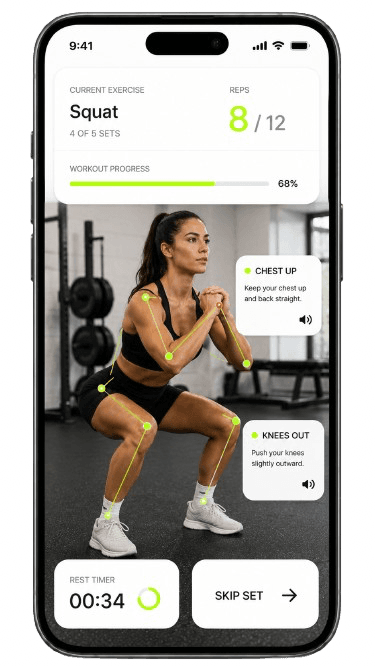
BODDY IN ACTION
Real-time coaching on the iPhone you already use.
Boddy follows supported movement, counts repetitions, and delivers concise visual and spoken cues during the set.

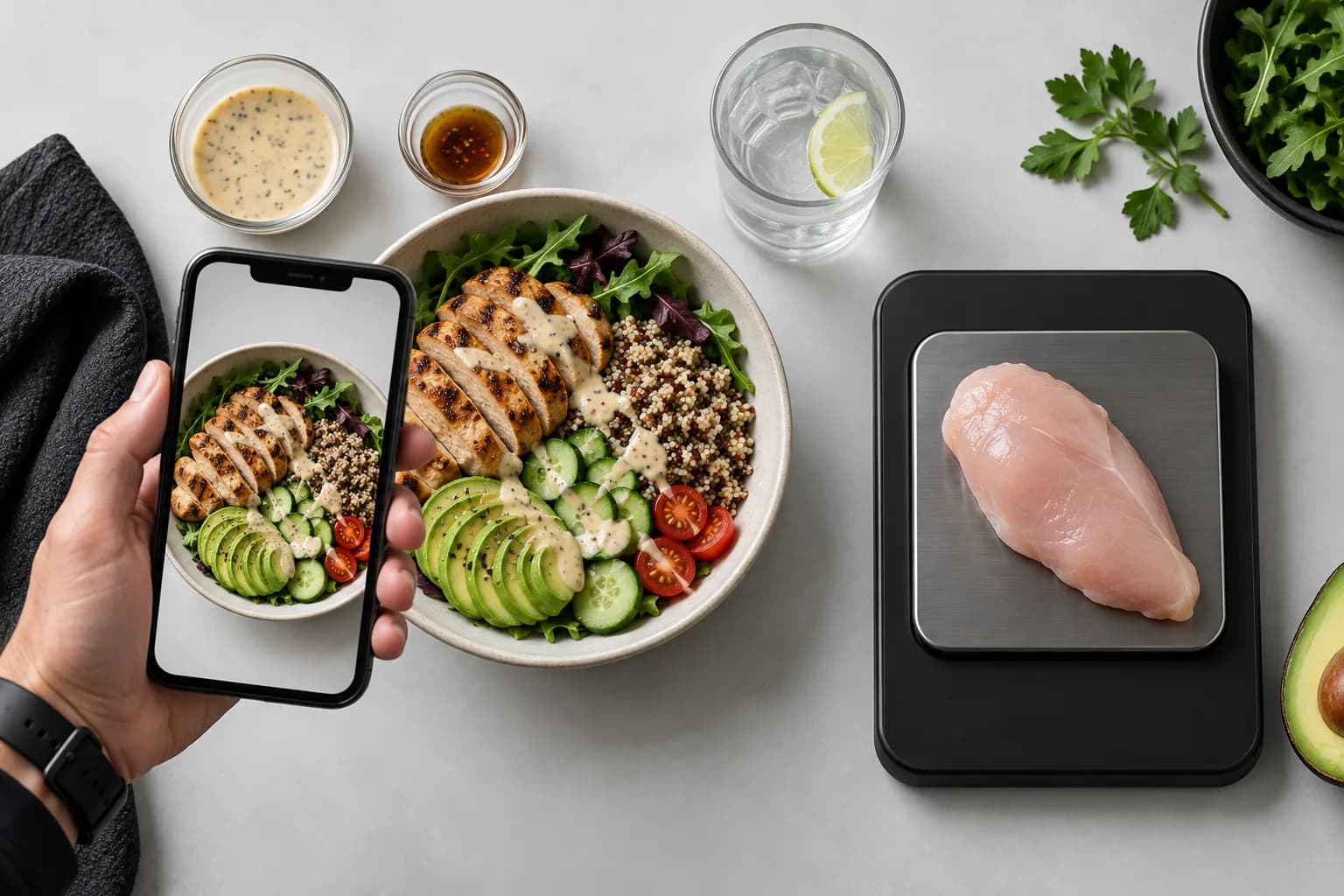
Direct answer: AI meal photos can reduce logging effort and often identify visible foods, but calorie and macro accuracy is limited by portion depth, hidden ingredients, cooking fats, recipes, and mixed dishes. Treat the result as an editable estimate, not a measurement.
The complaint behind the question
Users testing photo loggers against kitchen scales find the largest errors in portion size and composite meals. A flat image may recognize chicken and rice while missing oil, sauce, or the amount hidden underneath.
Why this happens
Calories depend on both identity and quantity. A two-dimensional photo contains incomplete information about volume, density, ingredients, and preparation. Research reviews report wide error ranges across systems and emphasize the need for validation against ground truth.
A five-point quality check
- Photograph the whole plate in good light.
- Separate foods visually when practical.
- Review every detected item.
- Correct portion sizes for calorie-dense ingredients.
- Use a scale when the decision requires tighter accuracy.
A safer decision rule
Photo logging is strongest when the alternative is not logging at all and a rough estimate supports consistency. It is weaker for medical nutrition decisions, precise macro targets, hidden oils, and mixed dishes where manual detail matters.
What good product behavior looks like
A meal photo should produce an editable estimate, not a definitive calorie measurement. Portion size, hidden oil, sauces, and ingredients beneath the visible surface need a chance for user correction. The app should distinguish what it recognized from what it assumed and allow a quick manual entry when the image is ambiguous. Comparing a few familiar meals with weighed or label-based entries is a practical calibration test; one impressive photo demo is not evidence of accuracy across daily eating.
Where Boddy fits
Boddy turns meal capture into part of the coaching context by placing nutrition beside workouts, recovery, and progress. The photo can accelerate logging, then the user can correct foods and portions before the estimate influences later decisions. That combination is more practical than a stand-alone calorie guess and more honest than presenting an uncertain image estimate as an exact total.
Important limit. A single picture cannot reveal all ingredients or measure portion depth reliably. Accuracy reported for one food dataset or camera setup does not transfer automatically to every cuisine, dish, or person. Do not use a photo estimate as medical nutrition advice; for clinical dietary needs, use the method recommended by a qualified professional.
A quick test before you depend on the feature
Worked example. A photo of chicken, rice, and vegetables may identify all three visible foods while still missing oil used in the pan, sauce under the chicken, and the depth of the rice portion. Review each detected item before saving: add the cooking fat or sauce if you know it was used, edit the rice portion from the amount you served, and remove any food the camera invented. If a decision depends on a tighter estimate, weigh ingredients while preparing the meal and log the recipe once for reuse. The photo then becomes a convenient starting record, not the source of truth for the entire meal.
Bottom line
Use image recognition to start a log, then correct portions and hidden ingredients. The photo cannot know everything on the plate.
Sources checked in September 2026
BODDY IN ACTION
Real-time coaching on the iPhone you already use.
Boddy follows supported movement, counts repetitions, and delivers concise visual and spoken cues during the set.
TRAIN WITH BODDY
Want coaching that responds while you train?
Boddy combines personalized plans, meal logging, progress tracking, and real-time form guidance in one iPhone experience.