
THE BODDY JOURNAL
How to Estimate Calories in a Restaurant Meal Without False Precision
BODDY IN ACTION
Real-time coaching on the iPhone you already use.
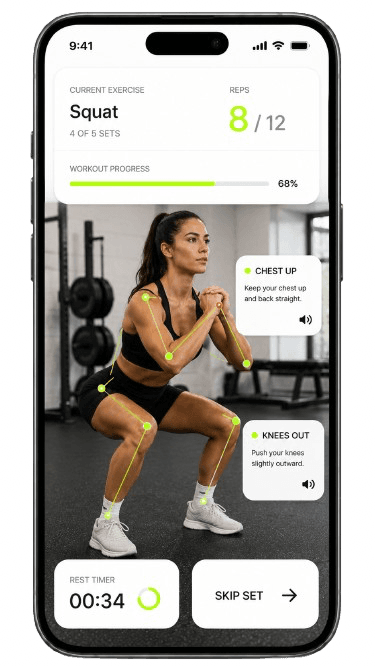
Boddy follows supported movement, counts repetitions, and delivers concise visual and spoken cues during the set.

Direct answer: If a restaurant meal has no nutrition information, choose a similar prepared-food entry, estimate the visible portions, and include obvious calorie-dense extras such as dressing, oil, cheese, or creamy sauce. Record a reasonable range or a consistent best estimate rather than pretending to know an exact number. A restaurant kitchen’s ingredient amounts and cooking fats are usually invisible from the plate.
Use the best information available
First check the restaurant’s official website or app for the exact item and serving size. If the dish and portion match, that is more useful than a generic database entry. Nutrition information may be available for some chain items and not others; recipes, locations, and customizations can differ. If no official value is available, use a comparable prepared-food listing in USDA FoodData Central as a reference, not as a claim that the restaurant used that recipe.
Read the menu description for the major ingredients and preparation: grilled or fried protein, rice or bread, vegetables, cheese, dressing, and sauces. Estimate the parts you can see using familiar portions, then note uncertainty. A grilled chicken bowl with rice is a different comparison from a breaded bowl with creamy sauce. For a mixed dish, the closest prepared meal entry may be more practical than inventing quantities for ingredients you cannot identify.
Include likely additions without overclaiming. If the meal is visibly dressed or cheesy, record that. A glossy surface cannot reveal exactly how much oil or butter was used. If sauce is served separately, logging the amount you actually used is more informative. If the serving is larger than the menu photo, adjust the portion estimate rather than assuming the pictured amount.
A worked example
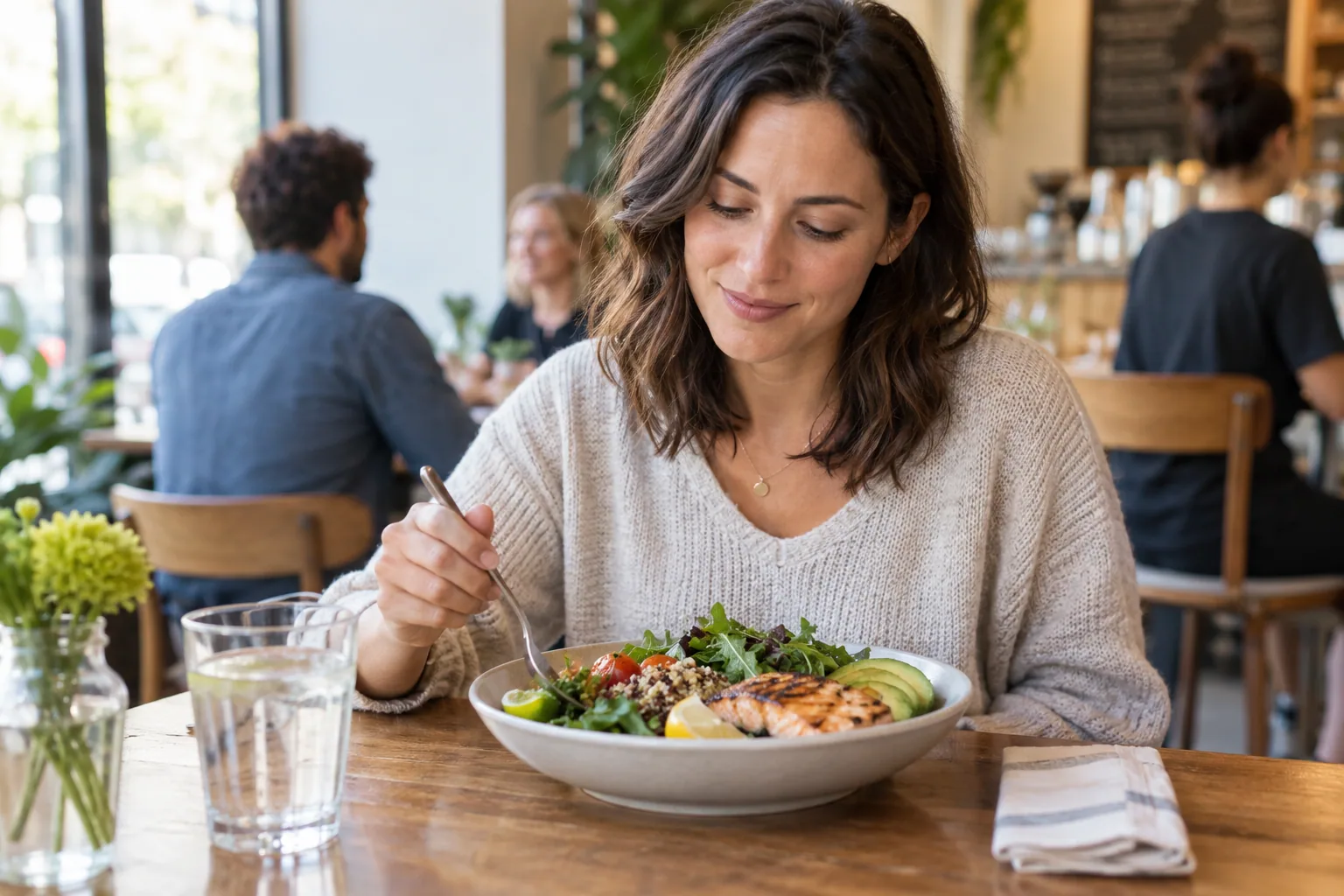
Imagine a restaurant grain bowl with grilled chicken, rice, vegetables, avocado, and an unknown dressing. If the chain publishes nutrition for the exact bowl and you ordered it unchanged, use that value. If it does not, select a similar chicken-and-rice bowl, estimate whether your serving was smaller or larger than a typical portion, and add a broad allowance for the visible avocado and dressing. Save it as an estimate; do not report a made-up exact oil quantity.
If you order the same meal regularly, reuse the same method for consistency unless you know the recipe or serving changed. If you later find official information, replace the estimate. A consistent estimate can support broad pattern tracking even though it may be off from the actual calories.
Keep uncertainty in proportion
One restaurant meal is not precise enough to justify skipping a later meal or adding exercise to “earn it.” Food databases contain averages, restaurants vary, and photos cannot reveal hidden ingredients or cooking methods. If you track meals, use the record to learn patterns, not to judge yourself. If logging at dinner distracts you, make a brief note afterward or leave that meal untracked.
People following a medically prescribed diet should ask their clinician or registered dietitian how to handle restaurant meals. If calorie numbers increase anxiety, rigid restriction, or disordered eating behaviors, stop the tracking approach and seek qualified support. Food logging is optional; social meals do not need to become a measurement exercise.
Log a practical estimate with Boddy
Boddy’s meal log can preserve a comparable dish, portion estimate, and note about visible extras. It cannot know a restaurant’s recipe or verify the calorie number. For food photos, its estimate also has limits; see the separate guide to meal-photo calorie accuracy.
Download Boddy on the App Store to keep meal records alongside your workouts and progress. Use an estimate that is useful for your routine, and accept the uncertainty instead of turning it into false precision.
Sources: USDA FoodData Central FAQ; FDA serving-size information; CDC healthy eating overview; Boddy overview.
BODDY IN ACTION
Real-time coaching on the iPhone you already use.
Boddy follows supported movement, counts repetitions, and delivers concise visual and spoken cues during the set.
TRAIN WITH BODDY
Want coaching that responds while you train?
Boddy combines personalized plans, meal logging, progress tracking, and real-time form guidance in one iPhone experience.