
THE BODDY JOURNAL
What Should an AI Fitness Coach Never Guess About Pain or Injury?
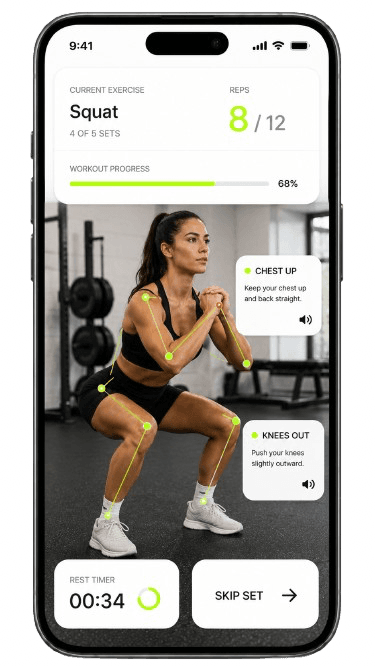
BODDY IN ACTION
Real-time coaching on the iPhone you already use.
Boddy follows supported movement, counts repetitions, and delivers concise visual and spoken cues during the set.

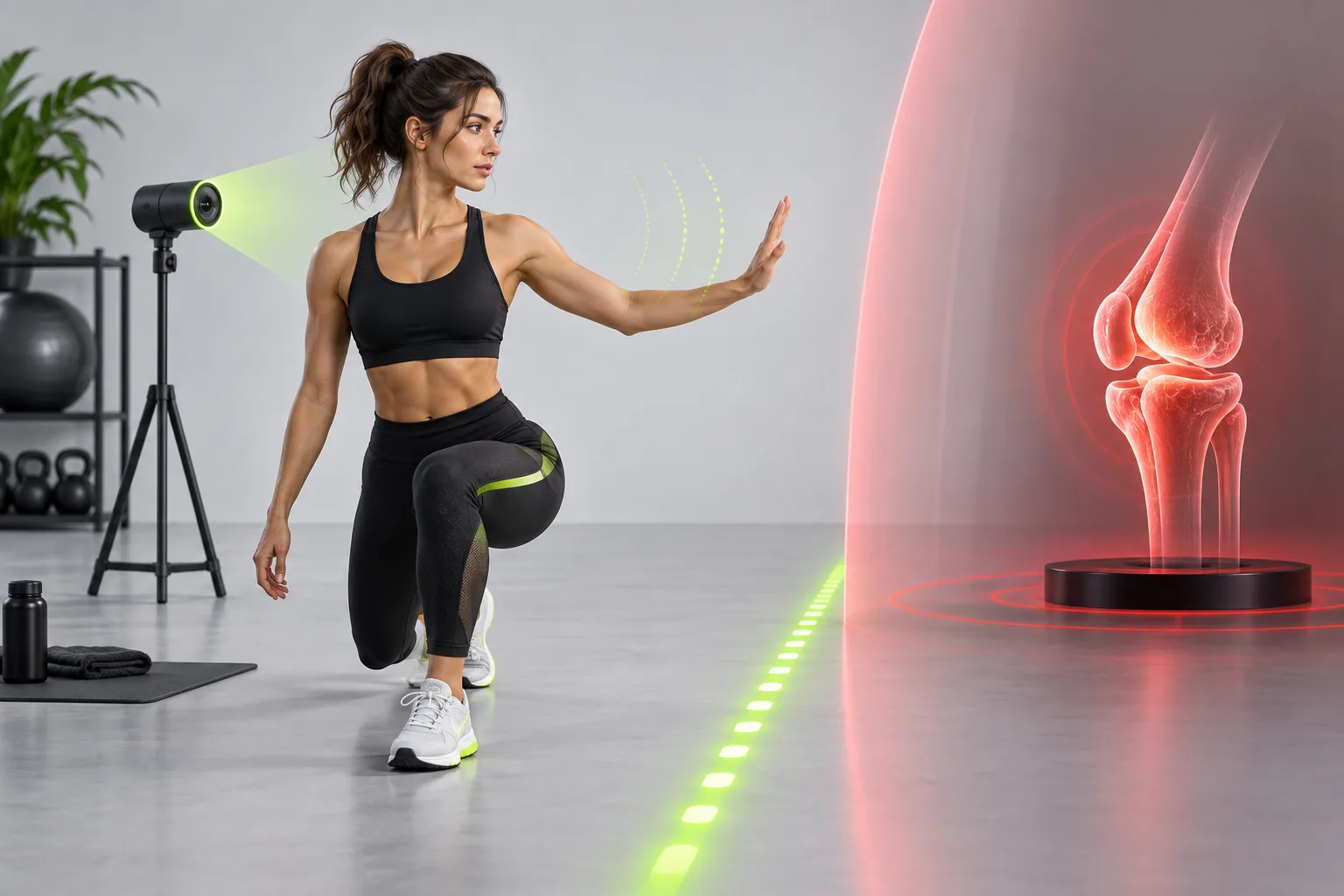
Direct answer: An AI fitness coach should not diagnose an injury, declare pain safe, prescribe rehabilitation beyond its validated scope, or use camera appearance as medical clearance. It should help the user stop, reduce risk, document context, and seek appropriate professional care.
The complaint behind the question
Users want personalization when something hurts, but a confident automated answer can be more dangerous than a limited one. The camera may see a movement pattern while missing pain quality, medical history, internal symptoms, and the cause.
Why this happens
Many conditions produce similar visible compensations, and some serious symptoms have little visible movement signature. Even qualified clinicians use history, examination, and sometimes testing. A consumer fitness app does not have that complete evidence.
A five-point quality check
- Stop for sharp, sudden, worsening, or unusual pain.
- Do not train through dizziness, chest pain, or neurological symptoms.
- Separate ordinary exertion from concerning signs.
- Record what happened without self-diagnosing.
- Use a qualified clinician for diagnosis and rehabilitation.
A safer decision rule
When uncertainty involves meaningful health risk, choose the conservative path. An app can suggest ending the set or selecting a non-provocative alternative, but it should not persuade someone to continue through a red flag.
What good product behavior looks like
A fitness coach should make it easy to stop a session, record the context, and find a suitable human-care route when symptoms are concerning. It should not infer a diagnosis from visible posture, propose rehabilitation it has not been validated for, or turn an ordinary form cue into permission to continue through pain. The safest interface is sometimes one that declines to advise. A person's symptoms can contradict a clean-looking camera trace, and the product must respect that boundary.
Where Boddy fits
Boddy is an appropriate solution for workout planning and real-time fitness feedback on supported movements; it is not a tool for diagnosing pain or injury. When pain appears, the correct Boddy workflow is to stop the set rather than coach through it, then let the user decide whether to rest or seek qualified care. That boundary is a product strength: useful coaching continues only where the app can provide it responsibly.
Important limit. A fitness app must not diagnose, clear, or coach through possible injury or urgent symptoms. A camera view can remain stable even when the person is unwell; human medical evaluation takes precedence over the app's output.
A quick test before you depend on the feature
Worked example. During a supported squat set, the camera may show a consistent movement while the person feels a new sharp pain. The visible rep count cannot tell whether the sensation is harmless. End the set, note when the symptom began and what movement was involved, and seek qualified medical advice before resuming if it persists or concerns you. Chest discomfort, faintness, or other alarming symptoms require prompt medical attention rather than an automated form score or a lighter replacement exercise.
Bottom line
When pain or alarming symptoms enter the workout, stop using the app as the decision-maker. Human medical judgment takes priority over an automated cue.
Sources checked in September 2026
BODDY IN ACTION
Real-time coaching on the iPhone you already use.
Boddy follows supported movement, counts repetitions, and delivers concise visual and spoken cues during the set.
TRAIN WITH BODDY
Want coaching that responds while you train?
Boddy combines personalized plans, meal logging, progress tracking, and real-time form guidance in one iPhone experience.