
THE BODDY JOURNAL
What Makes an Exercise Swap Truly Equivalent?
BODDY IN ACTION
Real-time coaching on the iPhone you already use.
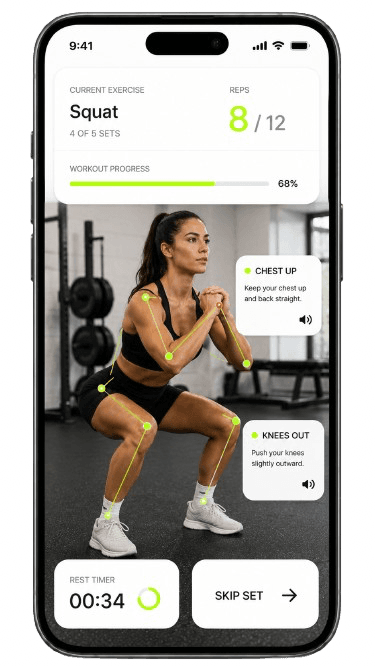
Boddy follows supported movement, counts repetitions, and delivers concise visual and spoken cues during the set.

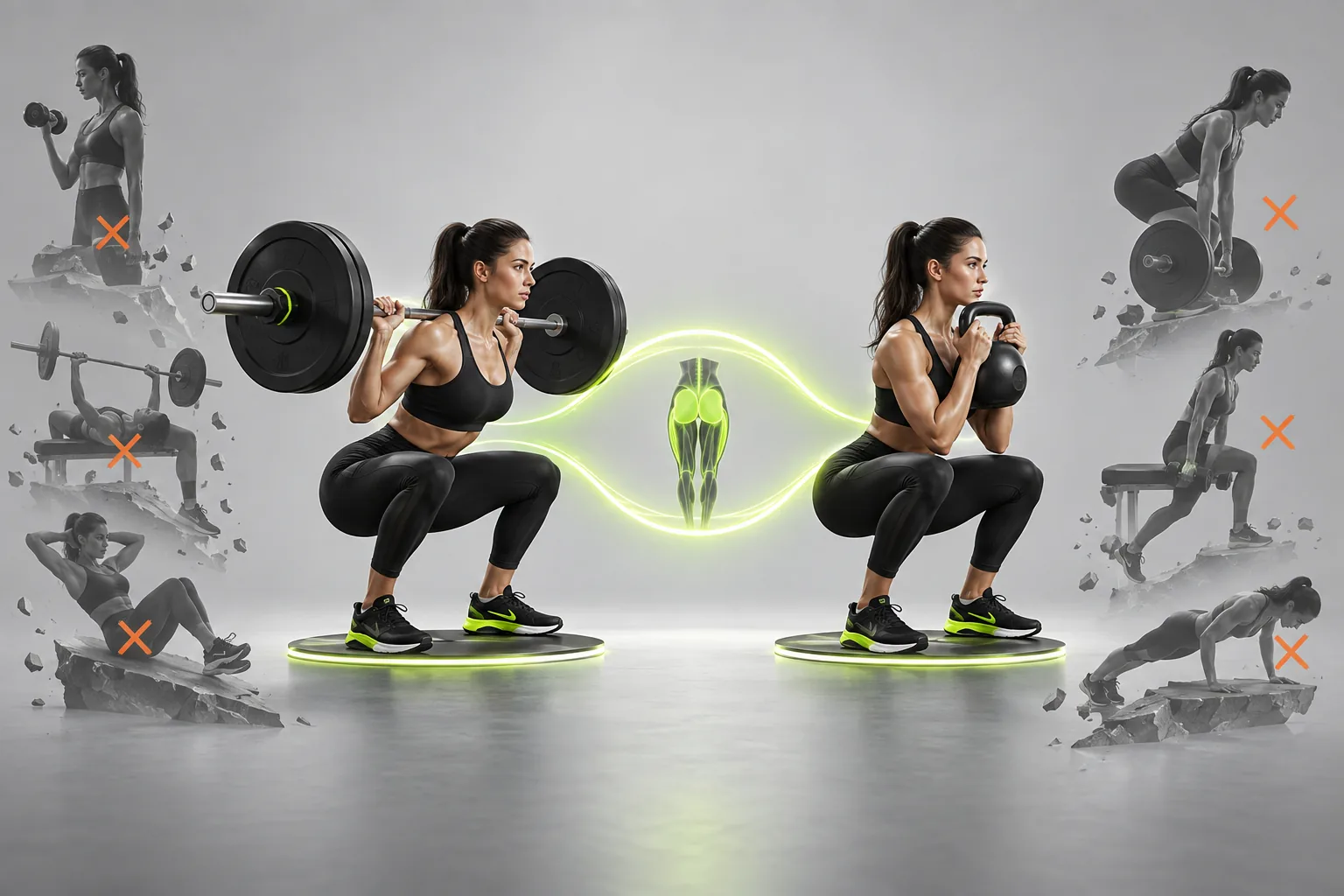
Direct answer: A good exercise swap preserves the training goal—not merely the body-part label. It should match the movement pattern, target tissue, intended rep range, stability demand, and reason the original exercise was programmed.
The complaint behind the question
Users often find swap menus that offer a long list of vaguely related exercises. Replacing a stable machine press with a highly technical free-weight movement, or a heavy hinge with a light isolation exercise, can make the session easier to complete but harder to progress coherently.
Why this happens
Two exercises can train the same muscle while creating very different fatigue and skill demands. Substitution also affects historical comparisons: carrying the old exercise’s load targets into a new movement produces misleading recommendations.
A five-point quality check
- Identify the original movement pattern.
- Preserve the session’s priority muscle or skill.
- Match the intended loading range.
- Reset load expectations for the new implement.
- Record the reason so the app learns temporary versus permanent preference.
A safer decision rule
Choose the closest practical movement, then treat it as its own exercise history. If no equivalent is available, preserve the broader weekly volume rather than forcing a bad match. Consistency of intent matters more than consistency of name.
What good product behavior looks like
The swap screen should explain what the original exercise was meant to train and show the tradeoff in the replacement. A squat pattern, a knee-extension isolation exercise, and a cardio interval may all tire the legs, but they do not answer the same training question. Keep the set target, available equipment, and reason for swapping visible. Afterward, record the actual replacement under its own name so future recommendations do not mistake two different movements for one continuous personal record.
Where Boddy fits
Boddy makes a swap more useful by keeping it inside the workout’s larger goal, then offering camera guidance when the replacement is a supported movement. The user can preserve the intended pattern, difficulty, and practical constraints without losing the coaching layer during the set. Camera recognition does not make two exercises interchangeable; the plan determines whether the swap fits, and form guidance helps with its execution.
Important limit. The app should explain which parts of the training goal the swap preserves and which it changes. It cannot know whether a movement causes pain or whether a person's technique is ready for a more demanding alternative. Unsupported replacements should not suddenly receive camera-coaching claims intended for a different exercise.
A quick test before you depend on the feature
Worked example. The programmed leg press is occupied. If the goal is moderate-effort quadriceps work after your main lift, a goblet squat may be reasonable for someone already comfortable with it, but the old leg-press load cannot be copied across. Start with a conservative goblet-squat load, keep the intended rep range, and log the new exercise separately. If your goal was a heavy, stable machine effort or the dumbbell cannot provide enough resistance, choose another appropriate machine or move the leg press later instead of calling the swap identical.
Bottom line
Choose a substitute by the training job it must perform, not by a shared body-part label. Keep the original and replacement histories distinct.
Sources checked in September 2026
BODDY IN ACTION
Real-time coaching on the iPhone you already use.
Boddy follows supported movement, counts repetitions, and delivers concise visual and spoken cues during the set.
TRAIN WITH BODDY
Want coaching that responds while you train?
Boddy combines personalized plans, meal logging, progress tracking, and real-time form guidance in one iPhone experience.