
THE BODDY JOURNAL
Why Do AI Workout Plans Ignore Custom Exercises?
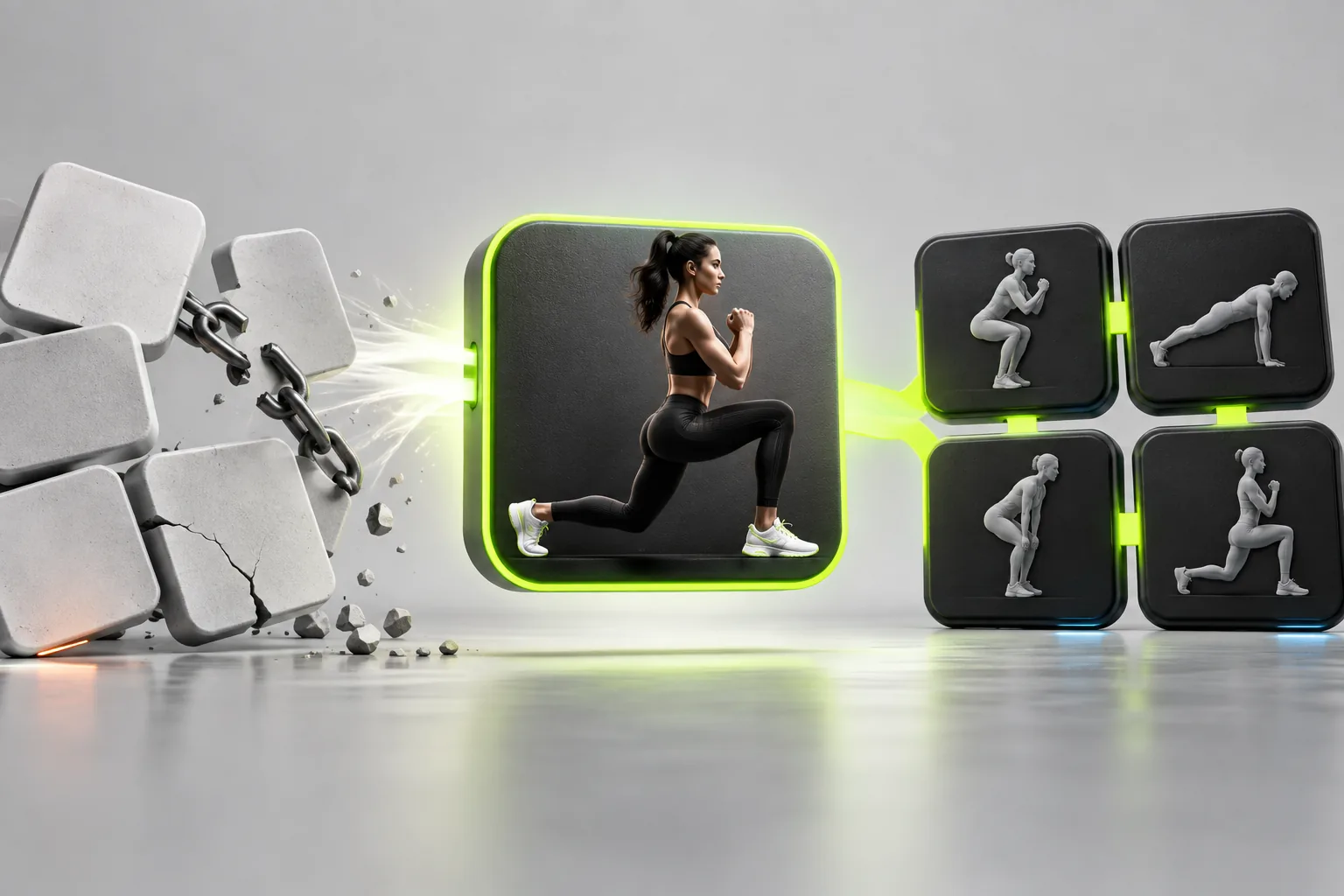
BODDY IN ACTION
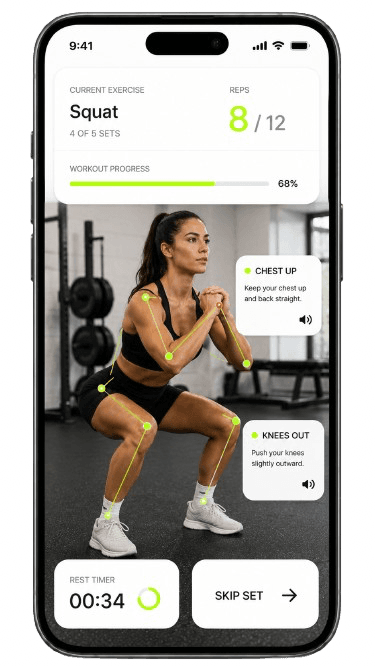
Real-time coaching on the iPhone you already use.
Boddy follows supported movement, counts repetitions, and delivers concise visual and spoken cues during the set.

Direct answer: Custom exercises are often ignored because the app lacks structured information about their movement pattern, muscles, equipment, loading, and progression. A name alone is not enough for safe automated programming.
The complaint behind the question
Experienced lifters report importing routines only to see duplicate custom entries, blank demonstrations, forced supersets, or a generator that never selects the movements they created. Manual logging works, but the supposedly intelligent planning layer treats the exercise as unknown.
Why this happens
Automation depends on metadata. Without a stable exercise identity and meaningful tags, an app cannot compare a custom movement with alternatives, estimate fatigue, or decide where it belongs. Guessing from the title can create more errors than leaving it manual.
A five-point quality check
- Custom exercises have editable movement and equipment fields.
- Duplicates can be merged without losing history.
- The user controls whether the generator may select them.
- Video or notes remain attached across devices.
- Progression stays separate from superficially similar exercises.
A safer decision rule
Use custom exercises manually until the app can represent them accurately. The right product behavior is transparent: it should say when a movement is loggable but not eligible for automated planning or camera coaching.
What good product behavior looks like
A custom movement needs more than a free-text name. The app should let the user record the implement, units, side or stance where relevant, rep or duration target, and why the movement belongs in the program. Renaming it later must not merge incompatible histories. If camera feedback is unsupported for that custom exercise, the interface should say so plainly while keeping the planned set and manual log usable. A flexible library should extend a coherent plan, not disguise an unknown exercise as one the model understands.
Where Boddy fits
Boddy keeps custom programming and camera coaching as two honest layers. A user-controlled workout can still include a movement that matters to the athlete, while supported exercises receive the live guidance the camera model is designed to provide. That is more useful than forcing every routine into a recognition list or pretending an untested custom movement can receive reliable correction.
Important limit. A label and muscle tag do not establish movement equivalence. Custom-exercise automation needs explicit metadata and a way to correct mistakes without losing history. If the app cannot represent the exercise safely, manual planning and logging are better than an opaque guess.
A quick test before you depend on the feature
Worked example. You create a ‘single-arm landmine press’ because it is part of a coach-written routine. A useful app asks for equipment, movement pattern, rep range, and whether the exercise may be suggested automatically. It keeps that exercise's loads separate from a dumbbell shoulder press and preserves notes about the setup. If camera recognition has not been tested for the landmine variation, the app can still let you log it without pretending to provide live form correction. When importing an older routine, verify that the custom entry was not merged with a similarly named movement.
Bottom line
A custom entry is useful when it preserves honest history and the program's purpose. Do not assume a new name makes camera cues or load predictions valid.
Sources checked in September 2026
BODDY IN ACTION
Real-time coaching on the iPhone you already use.
Boddy follows supported movement, counts repetitions, and delivers concise visual and spoken cues during the set.
TRAIN WITH BODDY
Want coaching that responds while you train?
Boddy combines personalized plans, meal logging, progress tracking, and real-time form guidance in one iPhone experience.