
THE BODDY JOURNAL
How to Take Movement Breaks During a Desk Day

BODDY IN ACTION
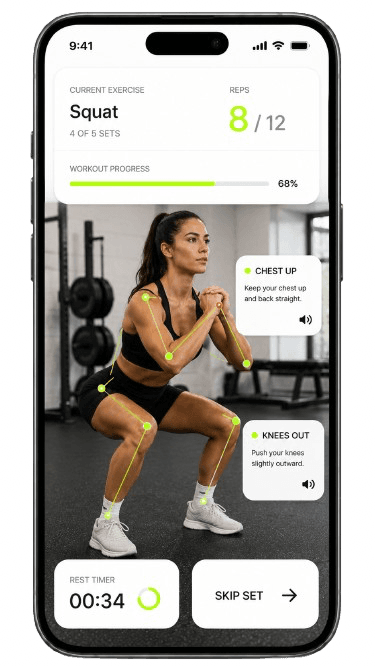
Real-time coaching on the iPhone you already use.
Boddy follows supported movement, counts repetitions, and delivers concise visual and spoken cues during the set.

During a desk day, use natural pauses to change position, walk briefly when suitable, or take a break from the screen. Choose a pattern you can repeat around your work. Add separate exercise if appropriate, while recognizing that a workout later does not make an uncomfortable workstation comfortable during the day.
NIOSH's home-working guidance recommends periodic breaks, changes in posture, and practical adjustments to seating and screen position. This guide turns those ideas into a workday menu. It does not diagnose why a hip, back, or neck feels uncomfortable, or promise that a movement break will treat pain.
Pick a break that fits the moment
| Workday opening | A simple option | Keep in mind |
|---|---|---|
| A call ends | Leave the chair and take a short walk if suitable | Keep the route clear and return when ready |
| You finish a task | Change position and look away from the screen | A break can be useful without becoming exercise |
| Lunch | Step away from the workstation | Choose rest, a walk, or another comfortable activity |
| A long meeting | Change posture or ask for a short pause where possible | Respect the work setting and your abilities |
The table is a menu, not a fixed medical dose. Start with an opening you already have. You can use a reminder if it helps, but adjust it when it repeatedly interrupts a task at the wrong moment. If leaving the desk is difficult, a clinician or occupational-health professional can help adapt movement and work arrangements to your needs.
Change the setup as well as the habit
Check whether your feet are supported, the screen is easy to view, and the keyboard and mouse are within comfortable reach. A separate keyboard or mouse can give you more options when using a laptop. You can often improve the arrangement you have before buying new equipment; ask your employer about available support and an appropriate workstation assessment.
Standing is one possible position change, not a requirement to stand all day. NIOSH's review of prolonged standing also describes discomfort and fatigue associated with long static standing. Use variation rather than replacing one unbroken posture with another. A standing desk cannot decide what arrangement is suitable for your symptoms or health.
Keep breaks different from a workout
A few minutes away from the desk can help interrupt a long stretch of stillness. Your separate training plan can have a different purpose: practicing strength exercises, walking for longer, or doing another activity you enjoy. Neither has to be a punishment for sitting.
If you are beginning strength work, start with a manageable plan rather than adding a large evening session to compensate for the whole workday. The two-day strength guide offers one weekly structure. You can also choose walking or another suitable activity; the important practical question is what your health, access, and schedule allow.
An example for a busy home-working day
Suppose meetings run from nine until lunch, with a few short gaps. Put water in a place that creates a natural reason to leave the chair, take a brief walk after one call, and move lunch away from the laptop. In the afternoon, change position after finishing a task and check whether screen glare is making you lean forward.
That evening, choose a familiar activity or rest according to the rest of the day. If the plan proves awkward, keep one break that worked and move another to a more reliable opening. You do not need a perfect hourly streak. Record what made the day more comfortable or easier to manage, rather than using the number of breaks as a score.
Treat persistent symptoms as a separate question
Feeling stiff after a long seated period does not tell you the cause. Avoid forcing a stretch or repeating an exercise that causes pain to prove you can loosen up. Persistent, worsening, or function-limiting symptoms deserve professional advice. Sudden weakness or numbness and other significant neurological symptoms need prompt assessment.
If you have back pain with loss of feeling around the genitals or anus, changes in bladder or bowel control, or symptoms in both legs, seek emergency medical care. The NHS back-pain guidance explains these warning signs. Use local urgent or emergency services rather than waiting for an exercise app to interpret them.
Boddy can help organize a separate workout and record what you complete. It does not assess workstation ergonomics or diagnose desk-related symptoms, and camera cues cover supported exercises with a suitable view. Get Boddy on the App Store if a plan and training history would be useful; for the transition after work, see the evening movement guide.
Sources
BODDY IN ACTION
Real-time coaching on the iPhone you already use.
Boddy follows supported movement, counts repetitions, and delivers concise visual and spoken cues during the set.
TRAIN WITH BODDY
Want coaching that responds while you train?
Boddy combines personalized plans, meal logging, progress tracking, and real-time form guidance in one iPhone experience.