
THE BODDY JOURNAL
A Two-Day Strength Training Plan for Busy Weeks
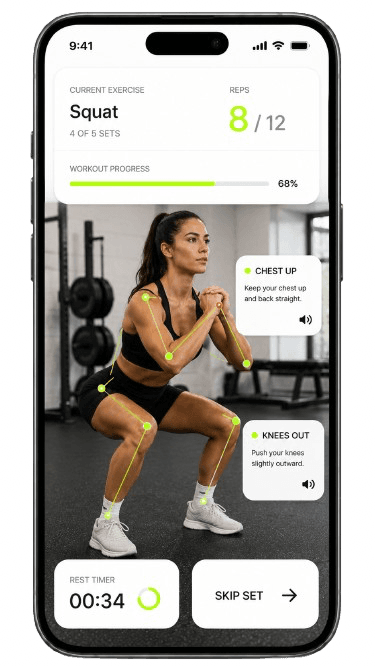
BODDY IN ACTION
Real-time coaching on the iPhone you already use.
Boddy follows supported movement, counts repetitions, and delivers concise visual and spoken cues during the set.

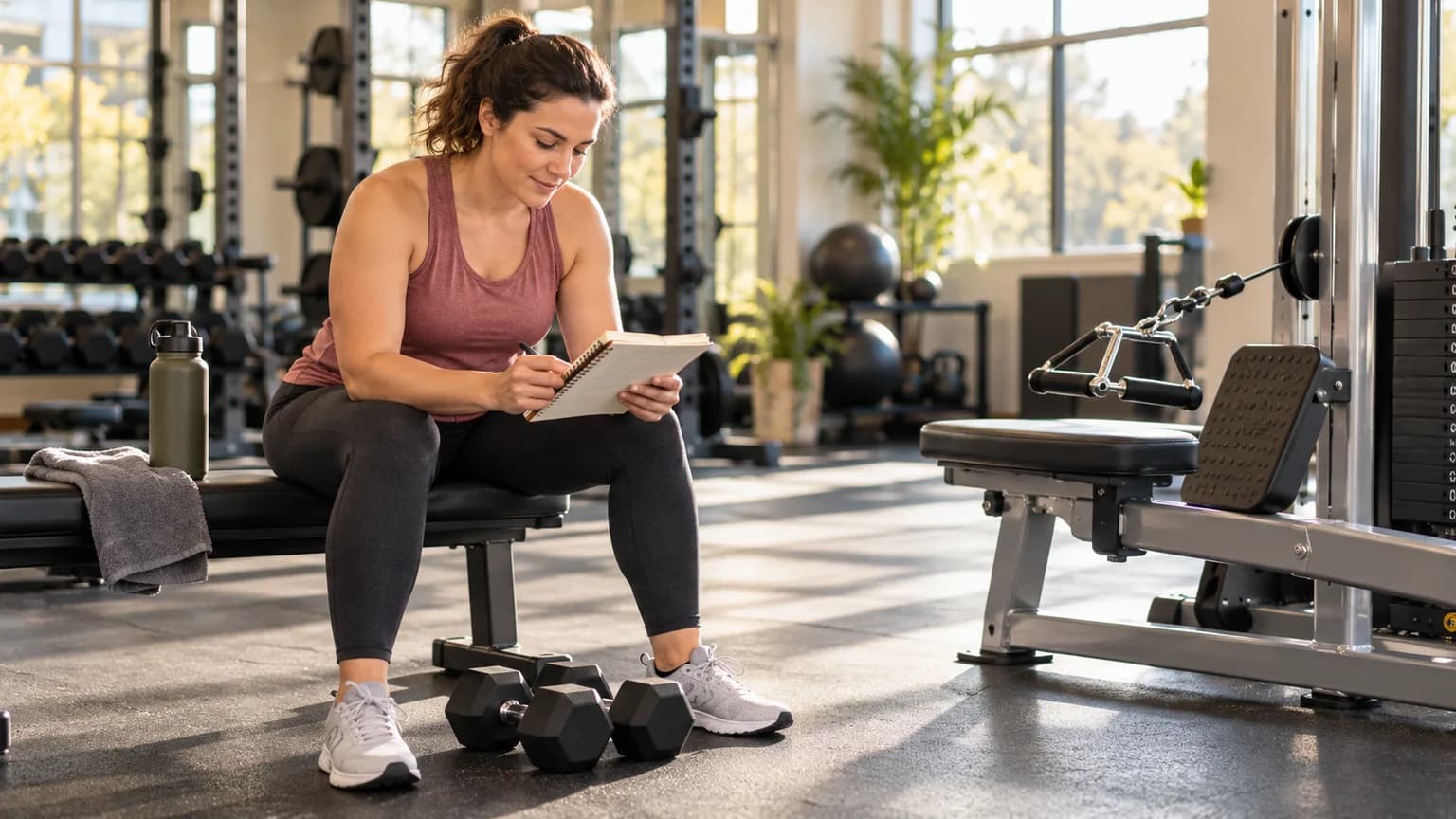
If two gym visits are what your week can reliably hold, use both for full-body strength work. Give each session a leg movement, a push, a pull, and a hip or trunk movement. Start with a small amount of controlled work, leave recovery time between sessions when practical, and keep the plan easy enough to repeat. You do not need to compress a five-day split into two days.
The U.S. Physical Activity Guidelines recommend muscle-strengthening activity on at least two days each week, alongside aerobic activity. That is a broad health recommendation, not a promise that any particular two workouts will achieve every strength or physique goal. If you can train more often later, you can reassess then.
A practical two-day A/B plan
Choose two days with time between them, such as Tuesday and Friday. Start with one set per movement while you learn the equipment; add a second set when the session remains comfortable and repeatable. The repetition ranges below are examples for practice, not a test you must pass.
Day A
| Movement | Example | Starting work |
|---|---|---|
| Legs | Leg press or sit-to-stand | 1–2 sets of 8–12 controlled repetitions |
| Push | Machine chest press or elevated push-up | 1–2 sets of 8–12 |
| Pull | Seated row | 1–2 sets of 8–12 |
| Hips or trunk | Hamstring curl or a comfortable trunk exercise | 1–2 controlled sets |
Day B
| Movement | Example | Starting work |
|---|---|---|
| Legs | Low step-up or another leg press variation | 1–2 sets of 8–12 |
| Pull | Lat pulldown or assisted pull | 1–2 sets of 8–12 |
| Push | Machine or light dumbbell shoulder press, if comfortable | 1–2 sets of 8–12 |
| Hips or trunk | Glute bridge, hamstring curl, or a comfortable trunk exercise | 1–2 controlled sets |
This is a menu, not a requirement to use every listed machine. You may repeat the same four movements on both days while learning. If an exercise is unfamiliar, ask gym staff about the equipment or choose a simpler movement you can control. A qualified exercise professional can help adapt a plan to your abilities and goals.
Make the sessions manageable
Begin with a few minutes of easy movement. Practice an unfamiliar exercise with little or no resistance before choosing a working load. On the first sessions, stop while you could probably do a few more controlled repetitions; avoid turning each set into a maximal effort. Rest long enough to perform the next set with similar control. If time runs out, leave off an optional exercise instead of rushing through the main movements.
Record the machine setting or equipment, load, repetitions, and one short note about effort. This makes the next session easier to judge. If you want a fuller discussion of choosing the first load, use our starting-weight guide. The goal here is a weekly structure, not a precise load prescription.
What if the calendar changes?
The workouts are a sequence, not a pair of sacred weekdays. If Tuesday disappears, do Day A at the next practical time, then Day B after you have recovered. Do not double the next session to “repay” a missed workout. If the only two available days are consecutive, you can do less work, use easier variations, or move one session; avoid hard work for the same muscles on both days. NIDDK's activity guide advises giving muscles time to recover and describes weights, machines, bands, and body-weight movements as strength options.
If you regularly miss one day, treat that as schedule information. Shorten a session, change its location, or choose a time you can actually protect. Our guide to restarting when life gets busy covers that scheduling decision. If three days become realistic, the three-day beginner plan gives a separate sample week; you do not need to add a day merely to make the plan look more serious.
A two-week example
In week one, you do Day A on Tuesday and Day B on Friday. You use one controlled set of each movement and note that the row felt easier than the leg press. In week two, a late shift removes Tuesday's window. You do Day A on Thursday, keep the same loads, and do Day B on Sunday after recovery. The sequence stays intact even though the weekdays move.
At the end of those two weeks, ask three questions: Did both sessions fit? Were the movements controlled? Is there room to add a set or a small load increase without making the week harder to repeat? Change one variable at a time. If a movement hurts, you feel unwell, or an existing condition affects what is safe, stop and seek appropriate individualized guidance. An app cannot decide medical readiness from a workout log.
Use Boddy for the plan and record
You can use Boddy to choose workouts that fit your goal and available equipment, then record the movements, loads, and repetitions you actually complete. Keep your own Day A and Day B notes so the next workout is clear even when weekdays shift. Boddy's camera cues apply only to supported exercises when movement is visible; they do not replace a coach, equipment orientation, or medical advice.
If you want guidance and a workout history in one iPhone app, get Boddy on the App Store. Start with the two sessions you can repeat, and use your record to decide what to adjust.
Sources
BODDY IN ACTION
Real-time coaching on the iPhone you already use.
Boddy follows supported movement, counts repetitions, and delivers concise visual and spoken cues during the set.
TRAIN WITH BODDY
Want coaching that responds while you train?
Boddy combines personalized plans, meal logging, progress tracking, and real-time form guidance in one iPhone experience.