
THE BODDY JOURNAL
How to Choose a Starting Weight for Any Exercise
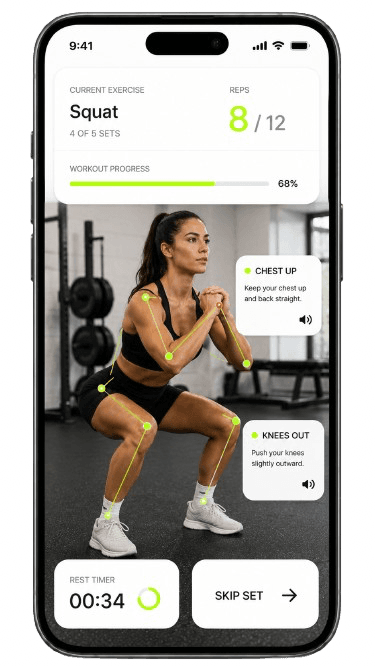
BODDY IN ACTION
Real-time coaching on the iPhone you already use.
Boddy follows supported movement, counts repetitions, and delivers concise visual and spoken cues during the set.

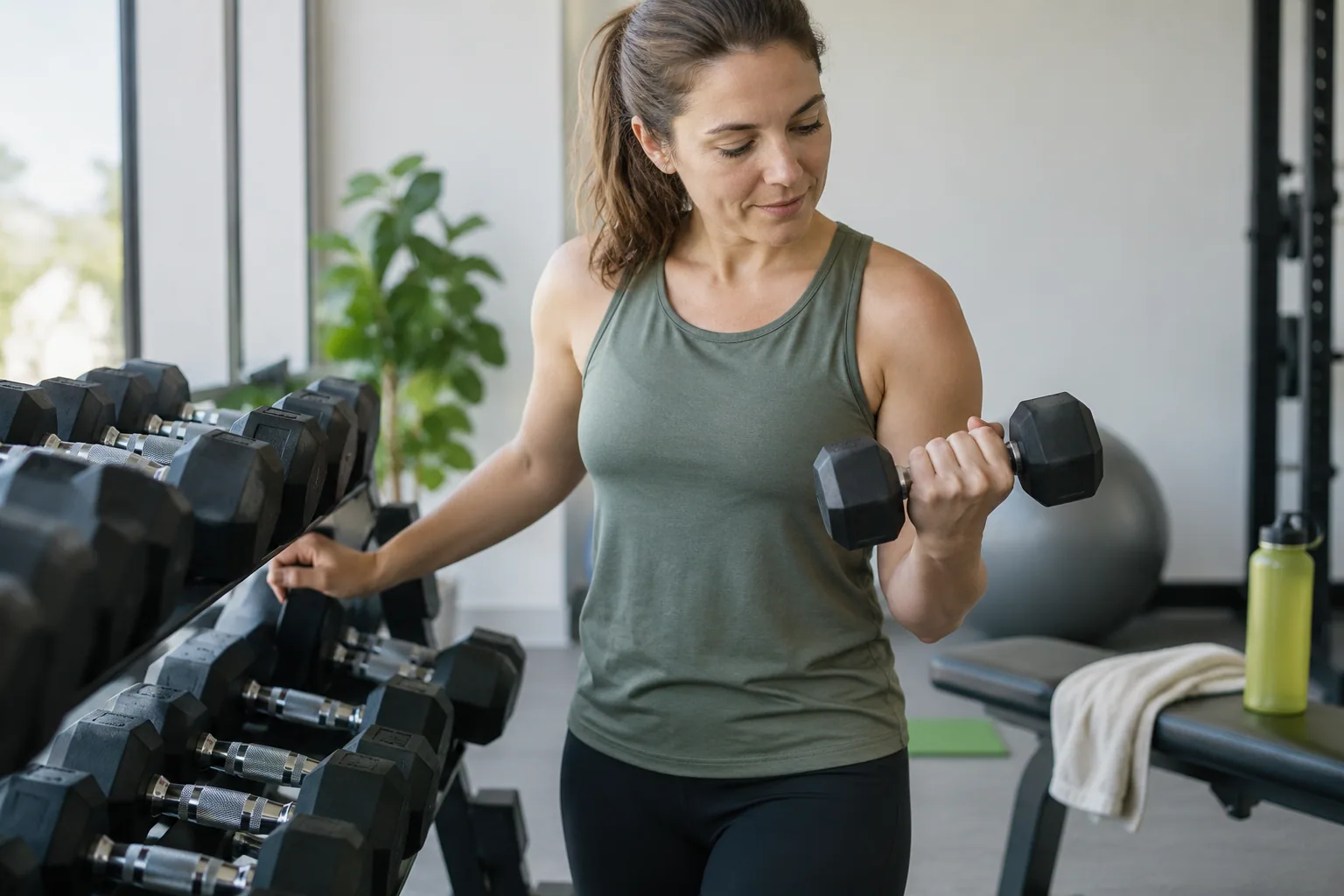
Choose a starting weight by practicing the movement first, then testing a light load for the planned repetitions while keeping every rep controlled. The set should feel challenging enough to count as work but should end before you have to jerk, shorten the movement, or grind through a rep. A starting load is a testable estimate, not a number you must defend.
A practical three-step load check
First, rehearse the movement without added weight or with the lightest resistance available. Learn the range you can control and the setup you will repeat. For a machine, check the seat and safety stops; for dumbbells, pick a pair that feels easy to position and lower.
Second, perform a warm-up set of several comfortable repetitions. If the movement is new, stay light and focus on learning it. If you already know it, use a load clearly below your expected work weight. A warm-up prepares you to assess the exercise; it is not a competition set.
Third, try the target range—often 8–12 repetitions in beginner templates—and stop with a few more repetitions likely possible. If you lose control before the lower end, reduce the load or choose an easier version. If all repetitions are smooth and far easier than expected, make a small increase on the next set. Do not jump repeatedly until you find failure.
Why one weight does not fit every exercise
A 10 kg dumbbell used for a row is not automatically appropriate for a chest press or lateral raise. Each exercise uses different muscles, leverage, stability, and skill. Machine stack numbers are even less transferable: pulley arrangements and machine designs differ, so record the machine and settings rather than comparing it to another stack.
An empty bar can be too heavy for some people or movements. There is no rule that a barbell variation must be your first choice. Use a lighter technique bar, dumbbells, a machine, bands, or a body-weight variation if it lets you practice the same broad pattern with control. The best option is one you can set up reliably and perform without pain.
What if the dumbbell jump is too large?
Many gyms have gaps between pairs. If the next dumbbell is a large jump, repeat the current weight while gradually adding repetitions within your planned range. You can also improve control, use a smaller range appropriate to your current ability, or choose an exercise variation with smaller available increments. Do not swing the weight simply to complete a heavier set.
Warm-up sets do not have to match working sets. For example, a person may practice with a light pair, do another slightly heavier warm-up, then use a moderate pair for two work sets. The exact sequence depends on the exercise, experience, and session; it is not necessary to perform many tiring warm-ups for every small movement.
A worked example
Suppose you are learning a dumbbell floor press for 8–12 reps. You first rehearse the motion without weights, then try 4 kg dumbbells for eight controlled repetitions. Your shoulders remain comfortable and you could do several more. You rest, try 5 kg, and complete ten reps without changing your range or losing control. You record 5 kg and repeat it next time. If the first set had been jerky or uncomfortable, the useful decision would have been to return to 4 kg or ask for a different variation—not to push through because a chart said you should lift more.
After a long break, start below your previous training loads and let current performance guide you. If one side feels markedly weaker, or you have new pain, numbness, sudden weakness, or a major change in function, pause and get appropriate professional guidance instead of trying to correct it with extra weight.
Do this with Boddy
- Set your experience, training goal, equipment, and schedule so the suggested workout has relevant context.
- Review the exercise and use a light practice or warm-up set to judge the load; treat any proposed number as a starting point you can adjust.
- Record the actual load, equipment, repetitions, and effort so future sessions can be compared with the same exercise and setup.
Boddy helps organize a plan and log training, but an app cannot know from a number alone whether a load is appropriate for you. Camera cues apply only to supported movements and visible details. Get Boddy on the App Store to plan and track your workouts.
Sources
BODDY IN ACTION
Real-time coaching on the iPhone you already use.
Boddy follows supported movement, counts repetitions, and delivers concise visual and spoken cues during the set.
TRAIN WITH BODDY
Want coaching that responds while you train?
Boddy combines personalized plans, meal logging, progress tracking, and real-time form guidance in one iPhone experience.