
THE BODDY JOURNAL
A Three-Day Beginner Gym Plan You Can Repeat
BODDY IN ACTION
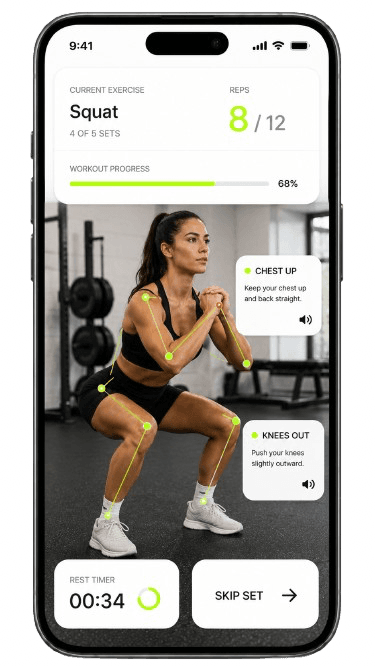
Real-time coaching on the iPhone you already use.
Boddy follows supported movement, counts repetitions, and delivers concise visual and spoken cues during the set.

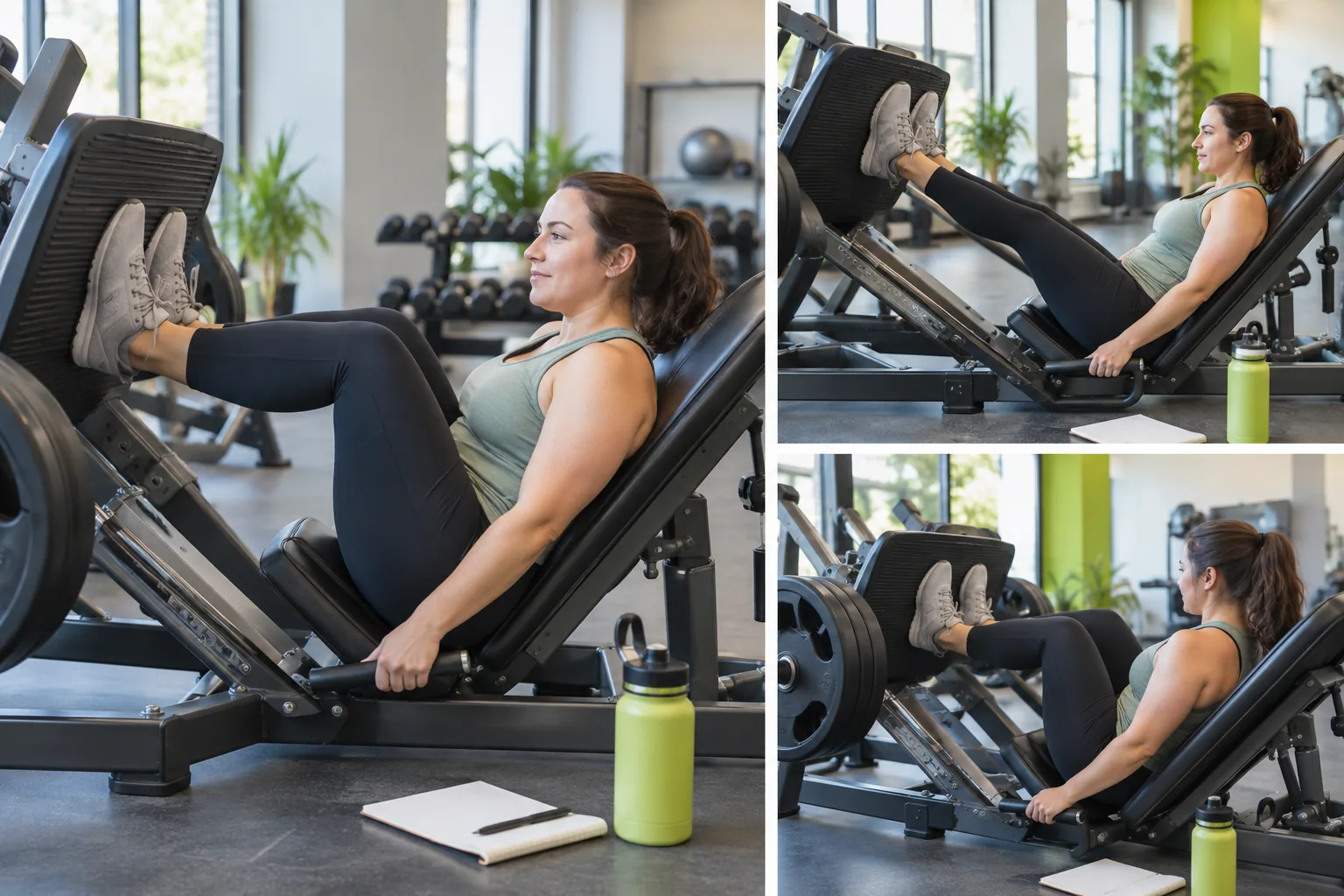
A practical three-day beginner plan uses manageable full-body sessions on nonconsecutive days. Each session can cover a leg movement, a push, a pull, and a hip or trunk exercise. Begin with one or two controlled sets rather than trying to do everything in the gym. Three days is a useful schedule if it fits your life; two days can also be a sound place to start.
A repeatable week
Try Monday, Wednesday, and Saturday, or pick any three days with recovery time between strength sessions. Keep the same basic template for several weeks while you learn the movements. Each workout might take 35–50 minutes depending on rests and equipment availability.
| Pattern | Beginner option | Starting work |
|---|---|---|
| Legs | Leg press or sit-to-stand | 1–2 sets of 8–12 |
| Push | Machine chest press or elevated push-up | 1–2 sets of 8–12 |
| Pull | Seated row or machine row | 1–2 sets of 8–12 |
| Hips/back of legs | Hamstring curl or light hinge practice | 1–2 sets of 8–12 |
| Trunk | Dead bug or comfortable plank variation | 1–2 controlled sets |
This is a menu, not a requirement to complete every row on day one. Choose exercises you can set up and perform comfortably. If an exercise is unfamiliar, ask a qualified trainer to demonstrate it or use a simpler variation. If a machine is busy, choose an alternative that trains a similar broad pattern or move to another exercise and return later.
How hard should the first sessions feel?
Begin with a few minutes of easy walking or cycling, then practice each movement with little or no resistance. On working sets, select a load that lets you complete the chosen repetitions with controlled movement and a few more repetitions likely still possible. Stop a set before technique changes into straining or jerking.
Rest until your breathing is comfortable and you feel ready to repeat the movement. A beginner does not need a maximal test to learn whether a load is appropriate. The first two weeks are practice: remember the seat setting, learn the range that feels comfortable, and write down the load and repetitions.
Strength training should not be scheduled hard for the same muscles on consecutive days when you are new to it. NIDDK recommends starting slowly and includes weights, machines, bands, and body-weight exercises among ways to strengthen muscles. See NIDDK guidance. For general adults, U.S. guidelines recommend muscle-strengthening activity on at least two days each week and aerobic activity as well; these are broad public-health targets, not a pass/fail test for your first week. Read the guidelines summary.
Progress at a pace you can repeat
Log the movement, machine setting or equipment, load, repetitions, and a short note about effort. When you can reach the top of your target range on all sets with stable control in two workouts, try the smallest available increase next time. If the increase makes the movement jerky or cuts your comfortable range, return to the previous load. It is fine to repeat the same weight while you build confidence.
Do not compensate for a missed day by squeezing sessions together. Continue with the next planned workout when it fits. If a week only allows two sessions, complete two and resume your normal rhythm next week. Consistency comes from a schedule that survives ordinary disruptions.
A worked example
On Monday, you do leg press, chest press, seated row, and dead bug for one set each. You use 10 repetitions for the first three movements and stop while each rep still feels controlled. On Wednesday, you repeat the routine and note that the row was easier but the leg press felt unfamiliar. You keep the same load, ask staff to check the seat setup, and only consider an increase after two controlled sessions. That is useful progression: evidence first, small adjustment second.
If you want a broader overview of beginner coaching options, see our beginner fitness coaching guide; this article focuses on the actual sample schedule.
Do this with Boddy
- Set your training goal, experience, weekly availability, and equipment so the proposed routine has practical context.
- Review the planned session before you start and keep the first week manageable, using a simpler supported option when an exercise is unfamiliar.
- Record the movements, sets, repetitions, and loads you completed, then check that history before the next session.
Boddy’s camera cues cover supported movements and visible details; they do not replace instruction or assess a medical condition. Get Boddy on the App Store to plan and log your training.
Sources
BODDY IN ACTION
Real-time coaching on the iPhone you already use.
Boddy follows supported movement, counts repetitions, and delivers concise visual and spoken cues during the set.
TRAIN WITH BODDY
Want coaching that responds while you train?
Boddy combines personalized plans, meal logging, progress tracking, and real-time form guidance in one iPhone experience.