
THE BODDY JOURNAL
How to Choose Movement After Work When You Feel Tired

BODDY IN ACTION
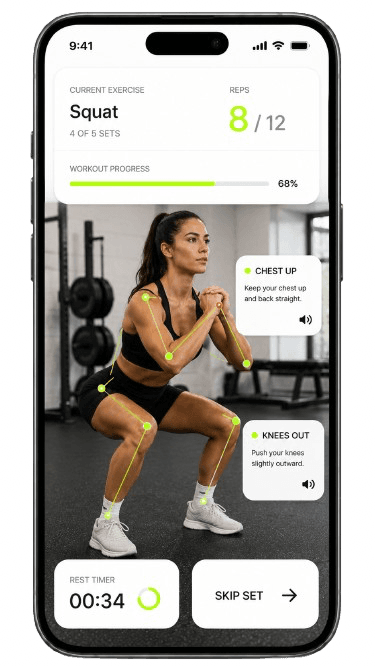
Real-time coaching on the iPhone you already use.
Boddy follows supported movement, counts repetitions, and delivers concise visual and spoken cues during the set.

When you feel tired after work, decide what kind of evening is realistic before committing to a workout. You might rest, take a short comfortable walk, or do a smaller version of a planned session. Choose an amount you can stop or adjust easily. A draining workday does not create a debt you must repay with exercise.
This guide addresses ordinary scheduling and end-of-day tiredness. It does not diagnose fatigue. The NHS advises seeking medical advice when tiredness lasts for weeks without a clear reason, affects daily life, or comes with other symptoms. If you have an illness or a condition that changes your response to activity, follow individual care advice rather than a general workout rule.
Make a check-in before choosing the session
Ask yourself three practical questions: Do I feel generally well? What does the rest of tonight require? What is the smallest activity I would willingly begin? These questions help select a routine; they are not a health screening test. New, unusual, or worsening symptoms should change the decision and may need professional assessment.
A person with a long commute and a healthy but tiring day might choose ten minutes of easy walking before dinner. Someone who already spent a demanding shift lifting and carrying may need rest and a different training window. Someone who feels faint, unwell, or unusually short of breath should not use a short workout to test whether the symptoms disappear.
Keep three options ready
| Tonight's option | What it could look like | Decision to make afterward |
|---|---|---|
| Rest and recover | Eat, settle practical needs, and protect sleep time | Choose the next realistic activity window |
| Easy movement | A brief comfortable walk or gentle movement you already know | Stop there or continue only if it feels appropriate |
| Planned strength session | A familiar session with optional work removed if needed | Record what you completed and how you responded |
The options are a menu, not a ladder you must climb. Rest does not have to earn a place below a workout. If walking is unsuitable or inaccessible, choose a comfortable activity that fits your ability, or rest. You can arrange a routine with an exercise professional when health or mobility makes the choice less straightforward.
Make the transition smaller
Look for the point where an evening plan usually gets lost. Does the gym require a second trip outside? Do you arrive home hungry? Does a family commitment begin immediately? Choose one practical change, such as packing clothes earlier, moving the gym visit to a free morning, or using a short home session on the day the commute runs late.
You can try a five-minute transition without making a promise to exercise afterward: put away work equipment, change into comfortable clothes, and decide what tonight needs. If you would like movement, prepare a safe route or clear a little space. If you need quiet time, leave that choice open. A transition is useful when it reduces decisions, rather than becoming another task to fail.
Review a week, not one tired evening
Suppose you plan two strength sessions after work. Tuesday repeatedly fails because it is your longest shift. Thursday usually works. After two weeks, move Tuesday's session to a weekend opening and keep a short walk as an optional Tuesday activity. You have changed the scheduling problem instead of responding with a harder workout.
Keep only a few notes: work hours, activity chosen, sleep opportunity, and whether tiredness is changing. You do not need a fatigue score or an app diagnosis. If you feel substantially worse after activity, or exhaustion persists despite ordinary adjustments, pause the experiment and discuss it with a clinician. In particular, do not follow generic gradual-increase advice for a condition with post-exertional symptom worsening; NHS ME/CFS guidance explains why management needs individual support.
Give sleep and family time a place in the plan
A late workout that repeatedly removes sleep or makes the next morning harder may be a poor fit, even if you complete it. A family walk, an earlier session on another day, or a shorter routine can serve different needs. For changing shifts, use the consistency guide to choose a normal week, a smaller minimum, and a next-session rule. If the workday is mostly seated, the desk movement-break guide offers practical changes during the day as a separate task.
Boddy can help you organize an ordinary strength session and keep its record. It cannot establish the cause of low energy or determine whether activity is medically appropriate. If planning and logging would reduce your evening decisions, get Boddy on the App Store. For a brief session template, see our 30-minute workout guide.
Sources
BODDY IN ACTION
Real-time coaching on the iPhone you already use.
Boddy follows supported movement, counts repetitions, and delivers concise visual and spoken cues during the set.
TRAIN WITH BODDY
Want coaching that responds while you train?
Boddy combines personalized plans, meal logging, progress tracking, and real-time form guidance in one iPhone experience.