
THE BODDY JOURNAL
How to Fit Exercise Into an Evening Without Squeezing Out Sleep

BODDY IN ACTION
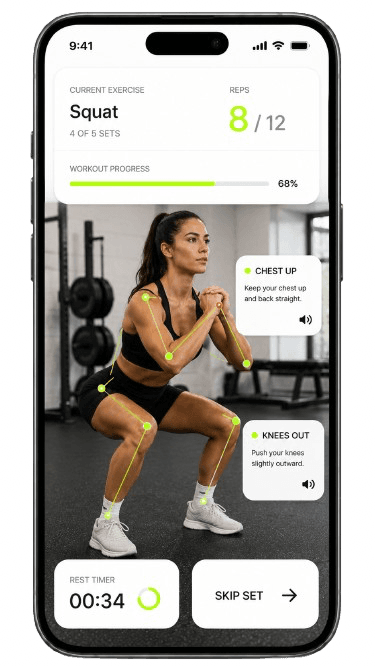
Real-time coaching on the iPhone you already use.
Boddy follows supported movement, counts repetitions, and delivers concise visual and spoken cues during the set.

Choose an exercise time that leaves enough room for your sleep schedule and the rest of your evening. Put a demanding workout earlier when practical, keep the period before bed quieter, and notice whether your routine leaves you settled or rushed. You can include movement without turning every evening into a workout or a sleep-improvement project.
NHLBI's healthy sleep guidance recommends making enough time for sleep, keeping a regular schedule, and using the hour before bed for quiet time while avoiding intense exercise and bright artificial light. This is general guidance, not a treatment plan for insomnia or a guarantee that a routine will make you sleep.
Start from bedtime and work backward
Write down when you need to wake, the time you want available for sleep, and the tasks your evening must include. Count the full cost of a workout: travel, changing, the session, food, and washing afterward. A thirty-minute session can occupy much more than thirty minutes when it requires a separate trip.
If the calendar only works by delaying sleep repeatedly, try a different day, an earlier window, or a smaller session. You can keep exercise in the week without putting it in the same slot every day. Our changing-schedule guide gives a way to keep a sequence when weekdays move.
Use a simple evening sequence
| Part of the evening | Example choice | What to protect |
|---|---|---|
| Work ends | Put away work equipment and decide what the evening needs | A clear transition, with permission to rest |
| Earlier free window | A planned workout, comfortable walk, or other suitable activity | Enough time for normal meals and recovery |
| Later evening | Prepare tomorrow's essentials and choose a quiet activity | A gradual reduction in demands and stimulation |
| Before bed | Read, listen to quiet audio, or use another familiar relaxing activity | Time available for sleep |
Treat the table as an example rather than a checklist. A caregiver might combine a short walk with family time; a shift worker may need a different sequence during daylight. You do not need a particular product, supplement, breathing technique, or ideal bedroom routine to make one useful scheduling change.
Keep movement appropriate to the available window
If you have a reliable early evening opening, that may suit a familiar strength session. If the day runs late, gentle movement or rest may fit better than squeezing in the hardest session of the week. Keep unfamiliar exercises and demanding sessions in a window where you can take your time.
Do not assume that everyone needs the same exercise cutoff. You can record when the session ended, how demanding it felt, and whether bedtime was delayed, then adjust one part of your schedule. Such notes can reveal a practical pattern; they cannot establish that exercise caused a sleep problem. Caffeine, work stress, illness, and other factors can change at the same time.
A worked evening example
Imagine someone who finishes work at six and wants a quieter period before a ten-thirty bedtime. On Tuesday they train soon after work, allowing time for the journey home and dinner. On Thursday an unexpected meeting removes that window. They choose a short comfortable walk and move strength training to Saturday, rather than start the full session late and rush everything afterward.
After a week they notice that packing gym clothes in advance helped Tuesday, while Thursday is often unpredictable. They keep Tuesday and Saturday as likely strength windows. Their evening becomes simpler through a calendar change; they do not need to measure every minute of sleep or make up Thursday's workout.
Choose a replacement for scrolling that you actually like
If you want less screen time late in the evening, put a specific alternative within reach: a paperback, a puzzle, quiet music, or a short conversation. Move the phone to a convenient charging place outside your immediate reach if that helps. The aim is to make your chosen activity easier to begin, rather than demand a perfect screen-free evening.
Persistently poor sleep deserves attention beyond a routine article. If sleep difficulties affect daily life, or someone notices breathing pauses, loud snoring, or gasping during sleep, discuss the symptoms with a healthcare professional. NHLBI lists these among sleep-apnea symptoms; an app cannot diagnose them. Avoid driving when dangerously sleepy.
Boddy can support the workout portion of an evening with planning and a training record. It is not a sleep treatment or sleep diagnostic tool. If you want help organizing ordinary strength work, get Boddy on the App Store; if end-of-day tiredness is the main obstacle, read the after-work movement guide.
Sources
BODDY IN ACTION
Real-time coaching on the iPhone you already use.
Boddy follows supported movement, counts repetitions, and delivers concise visual and spoken cues during the set.
TRAIN WITH BODDY
Want coaching that responds while you train?
Boddy combines personalized plans, meal logging, progress tracking, and real-time form guidance in one iPhone experience.