
THE BODDY JOURNAL
How to Prepare for a Physically Demanding Job

BODDY IN ACTION
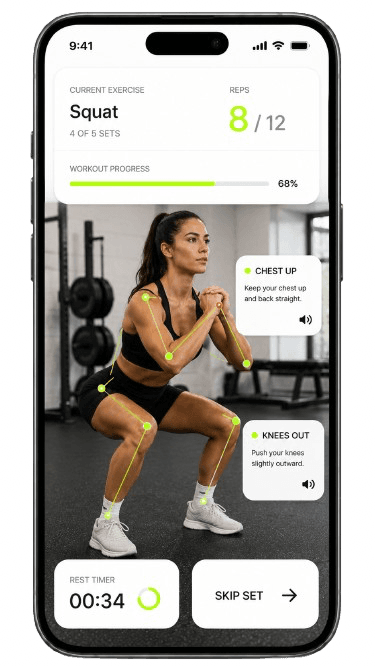
Real-time coaching on the iPhone you already use.
Boddy follows supported movement, counts repetitions, and delivers concise visual and spoken cues during the set.

Prepare for a physically demanding job with gradual general conditioning and clear questions about the actual work. Walking and basic strength activity may help build general capacity, but a gym workout cannot certify you for a role, teach site-specific procedures, or make every lift safe. Use the employer’s training, equipment, and reporting process for job tasks.
Find out what “physically demanding” means
One job may involve hours of standing; another may include walking, pushing carts, repetitive reaching, lifting, carrying, climbing, or work in heat. Ask the supervisor or training lead what the tasks look like, which loads require equipment or a team lift, what training is provided, and how to report pain or hazards. Ask where carts, hoists, or other aids are kept. Follow the written procedure for your workplace.
NIOSH identifies factors such as heavy physical work, lifting, forceful movements, repetition, and awkward postures as workplace ergonomic risks. Their intensity, frequency, and duration matter. That means the best solution is often safer task design, appropriate equipment, or work organization—not asking one worker to become stronger enough to tolerate every condition. Local rules and employer procedures vary.
Build general capacity without rehearsing risky tasks
If you are currently inactive and have no symptoms that need evaluation, begin with comfortable walks and familiar light strength exercises. Chair sit-to-stands, wall push-ups, a supported row, or an easy hip hinge can be examples of general movement practice. Start with a small amount, repeat it, and add a little time or resistance only when you recover comfortably. Avoid practicing a heavy work lift with a loaded box at home.
For someone starting a warehouse role in three weeks, a cautious routine might be two easy walks and one short strength session in the first week. They can repeat the same routine in week two before adding a few minutes to one walk. Meanwhile, onboarding should cover the actual boxes, routes, carts, team procedures, and hazards. A successful light carry at home is not approval to move a work load outside the required process.
Public physical-activity guidelines describe activity for general health; they are not occupational fitness standards. If you have a chronic condition, have been inactive for a long period, or plan vigorous exercise, ask a healthcare professional whether your planned start is suitable.
Manage work and recovery together
Starting a new shift schedule can leave less time and energy for workouts. Treat demanding work as part of your total activity when choosing optional exercise; more is not always better. On long shifts, prioritize sleep, meals, hydration as appropriate to conditions, and employer break procedures. Keep any extra sessions short and easy until you understand how your body responds to the new schedule.
Sharp pain, numbness, sudden weakness, dizziness, or unusual breathlessness should not be treated as ordinary conditioning. Stop exercise and seek appropriate advice. If symptoms occur at work, follow the reporting process and contact occupational health or a clinician as appropriate. Persistent fatigue has many possible causes and cannot be solved by assuming you need a harder workout.
Use Boddy for separate, optional conditioning
- Choose a short general workout with movements and equipment suited to your current ability and schedule.
- Log your sets, repetitions, and how you felt afterward, separate from your employer’s work training.
- Review the previous session before changing one training variable, and leave room for recovery around demanding shifts.
Boddy is an iPhone workout planner and progress tracker, with camera cues on supported exercises when visible details are clear. It does not provide occupational fitness clearance, job-specific lifting instruction, ergonomic risk assessment, or medical diagnosis. For optional personal planning, get Boddy on the App Store; use your employer’s safety program for the job.
Sources
BODDY IN ACTION
Real-time coaching on the iPhone you already use.
Boddy follows supported movement, counts repetitions, and delivers concise visual and spoken cues during the set.
TRAIN WITH BODDY
Want coaching that responds while you train?
Boddy combines personalized plans, meal logging, progress tracking, and real-time form guidance in one iPhone experience.