
THE BODDY JOURNAL
How to Stay Strong and Independent as You Get Older

BODDY IN ACTION
Real-time coaching on the iPhone you already use.
Boddy follows supported movement, counts repetitions, and delivers concise visual and spoken cues during the set.
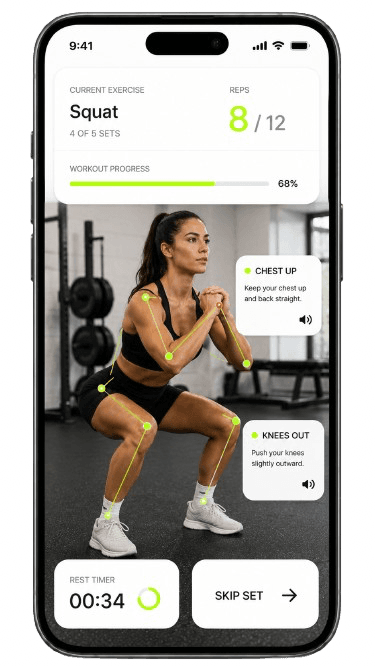

Staying strong as you get older starts with regular activity that fits your health, balance, and current ability. A useful mix can include muscle strengthening, aerobic movement such as walking, and balance practice when appropriate. The goal is to support the activities that matter to you—not to promise that exercise will prevent falls, illness, or future assistance needs.
Choose a meaningful everyday goal
Think of one task you want to maintain: standing from a chair, walking to a nearby shop, carrying a light grocery bag, gardening, or visiting family. This is more useful than choosing a routine because it is popular. For chair transfers, sit-to-stands may be relevant. For walking, short walks on a familiar route may be an accessible starting point. For carrying, practice with a very light object on a clear path, or use a trolley for real errands.
These are examples, not treatment for a medical condition. If you have a new limitation, pain, or fall history, the safest starting point may be advice from a clinician or physical therapist rather than a self-directed exercise list.
Include more than strength alone
CDC guidance for adults 65 and older includes aerobic activity, muscle-strengthening activity, and balance activities each week, adjusted to ability and health conditions. NIA likewise describes endurance, strength, balance, and flexibility as different parts of physical activity. Some activities, including gardening or dance, may combine more than one type.
You do not have to begin at the full weekly guideline. If you have been inactive, choose a small amount you can repeat and build over time. A first week might include two brief sessions of familiar, supported strength exercises and several short walks. Balance practice should be performed near a stable support, with supervision when needed. Do not practice standing on one leg or walking heel-to-toe if you feel unsteady without appropriate guidance.
Make the plan safer and easier to repeat
Use a sturdy chair, rail, or counter for support. Keep the floor clear, wear stable footwear, and use a load that allows smooth movement. Change one element at a time rather than increasing duration, resistance, and balance challenge together. Notice how you feel during the session and afterward; discomfort, fatigue, and recovery are useful reasons to adjust, not reasons to push through.
Consider a group class, exercise partner, or qualified professional if that makes activity more accessible. If you have chronic conditions or are unsure whether a movement is suitable, ask your healthcare provider. New falls, increasing unsteadiness, sudden weakness, or a decline in everyday function should prompt clinical assessment. Exercise can be valuable, but it is not a diagnostic tool or guarantee of independence.
A worked example: getting up from a chair more comfortably
Suppose standing from a low chair has become tiring, but there have been no falls and a clinician has said ordinary activity is appropriate. Start with a higher, stable chair near a counter. Practice a few smooth stands using the hands for support if needed, then stop before balance or technique changes. On another day, take a short walk on a familiar level route. Repeat the same amount for a week and note comfort. If it feels manageable, discuss lowering the chair or adding repetitions with a qualified professional. If the difficulty is new, getting worse, painful, or associated with falls, seek assessment instead of progressing alone.
Organize an optional self-directed routine with Boddy
- Choose a short workout with movements and equipment appropriate to your current ability.
- Log the repetitions, resistance, and any support or variation you used.
- Review the previous session before changing a single feature, and repeat a comfortable level when uncertain.
Boddy is an iPhone workout planner and progress tracker. Camera cues are available only for supported exercises with visible movement; Boddy cannot evaluate fall risk, assess a new balance problem, or tailor medical care. If falls, pain, or unsteadiness are part of the picture, speak with a clinician or physical therapist first. For a self-directed plan and record, get Boddy on the App Store.
Sources
BODDY IN ACTION
Real-time coaching on the iPhone you already use.
Boddy follows supported movement, counts repetitions, and delivers concise visual and spoken cues during the set.
TRAIN WITH BODDY
Want coaching that responds while you train?
Boddy combines personalized plans, meal logging, progress tracking, and real-time form guidance in one iPhone experience.