
THE BODDY JOURNAL
How to Keep Up With Active Kids When You Have Little Time

BODDY IN ACTION
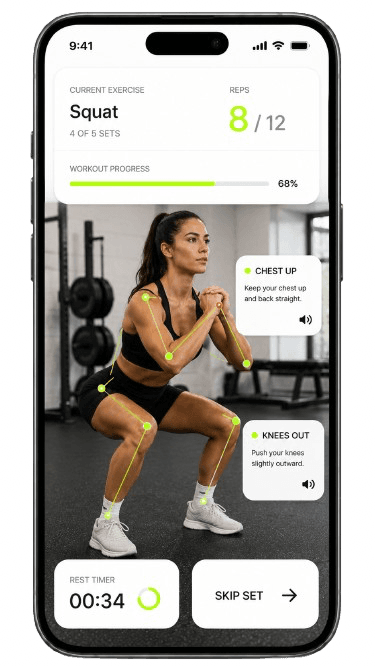
Real-time coaching on the iPhone you already use.
Boddy follows supported movement, counts repetitions, and delivers concise visual and spoken cues during the set.

You do not need a large block of free time to begin building capacity for family life. A practical approach is to add short, repeatable movement sessions to the week, practice the kinds of activity you want to enjoy with your children, and pace play so you can stay involved. Strength work may support everyday tasks such as getting up from the floor or carrying a child, but it cannot guarantee more energy or prevent injury.
Start with the moments you want to enjoy
“Keeping up” can mean very different things: walking to a playground, getting down to a child’s level, joining a game, carrying a tired toddler, or having enough energy for an outing after work. Choose one or two moments that matter most. That gives your plan a clear purpose without treating parenting as a fitness test.
For example, if floor play is tiring, practice comfortable sit-to-stands and supported squats. If a stroller walk feels hard, begin with a route and pace that leave room to talk. If carrying a child is the main challenge, use a carrier designed for your child’s age and size, keep the route short at first, and ask another adult to share carrying when possible. These are general examples; the right movement depends on your current ability and health.
Make consistency fit a crowded week
When time is limited, a short plan you can repeat is more useful than an ideal plan you rarely start. Try two brief strength sessions on days that are already predictable, such as after school drop-off or before a regular evening routine. On other days, count walks, active games, or playground time as movement rather than adding another obligation.
An example week might be two 15-minute sessions with chair squats, wall push-ups, and a light row, plus two family walks. Keep the first week easy enough that you can finish with energy left. If the week becomes busy, shorten a session instead of treating the routine as failed. The CDC’s adult guidance recommends muscle-strengthening activity on at least two days each week, while also recognizing that some activity is better than none and that people can build up gradually.
Practice play, not just workouts
General exercise does not reproduce every demand of active parenting. If you want longer outings to feel more manageable, practice walking on similar terrain. If you often get up and down from the floor, practice that transition near a stable support. If playground time involves crouching or reaching, vary your positions and take turns with another caregiver. Increase one element at a time—duration, pace, or difficulty—rather than making every outing longer and harder at once.
Pacing helps too. Bring water and weather-appropriate layers, choose an outing with a shorter route back, and take a break before you feel completely spent. Children’s needs change quickly, so leave space for unplanned stops. A good family outing does not need to become a training session.
Carry a child thoughtfully
Children grow, and yesterday’s carry may no longer feel comfortable. Use a child carrier or stroller when appropriate, split longer carrying into shorter periods, and avoid carrying a child while also balancing bags or navigating stairs if that feels unstable. Do not use a strength exercise to rehearse a heavy or awkward child carry. If your child’s size, your balance, or the environment makes the situation feel unsafe, get another adult’s help.
New or worsening pain, unexplained exhaustion, dizziness, or unusual breathlessness deserves attention rather than a harder workout. Persistent fatigue can have many causes. If you have recently given birth, had surgery, or are managing a medical condition, ask a clinician about a suitable return to activity. Boddy cannot assess postpartum recovery, diagnose fatigue, or supervise a child; see our guide to AI fitness coaching and pain or injury limits for the broader boundary.
A worked example: a busy parent’s first two weeks
Imagine a parent who works full time and wants to join a weekend park walk without feeling rushed. In week one, they take two 10-minute walks at an easy pace and complete one short, familiar strength session. They also choose a park loop with benches and an early turnaround option. In week two, if recovery feels comfortable, they repeat the routine and add five minutes to one walk. They keep the same strength load so several changes do not stack up at once. If a child needs carrying, they use a suitable carrier and shorten the route rather than trying to prove they can carry farther.
The target is a workable routine and a more enjoyable outing—not a promised fitness result by a deadline. Rest, sleep, care duties, and health all affect what is realistic.
Use Boddy to organize the exercise part
- Choose a short workout that fits your schedule and available equipment.
- Log the exercises, repetitions, and effort so you can remember what you actually completed.
- Review the previous session before changing one variable, such as a repetition or a small amount of resistance.
Boddy is an iPhone app for workout planning and progress tracking, with camera cues on supported exercises when movement is clearly visible. It does not coach parenting tasks, assess child-carrying safety, or tell you why you feel tired. If a simple plan and log would help, get Boddy on the App Store.
Sources
BODDY IN ACTION
Real-time coaching on the iPhone you already use.
Boddy follows supported movement, counts repetitions, and delivers concise visual and spoken cues during the set.
TRAIN WITH BODDY
Want coaching that responds while you train?
Boddy combines personalized plans, meal logging, progress tracking, and real-time form guidance in one iPhone experience.