
THE BODDY JOURNAL
How to Prepare for Walking All Day on Vacation

BODDY IN ACTION
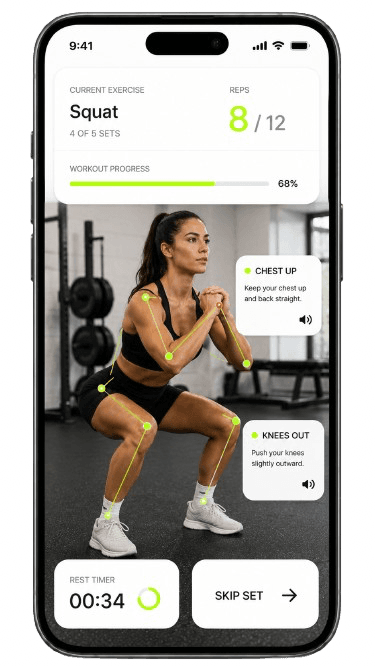
Real-time coaching on the iPhone you already use.
Boddy follows supported movement, counts repetitions, and delivers concise visual and spoken cues during the set.

If your vacation involves museums, neighborhoods, markets, and stations, prepare for time on your feet—not an arbitrary step-count target. Start with walks you can already manage, add a little time gradually, and try a few outings on consecutive days before you leave. On the trip, comfortable shoes, breaks, water, and permission to use transit may matter more than squeezing in another workout. No plan can guarantee that you will never feel tired.
Estimate the day you are actually planning
A city itinerary can hide a surprising amount of walking. A museum may mean standing more than walking; an old town may add uneven paving and stairs; a station transfer may involve carrying a bag. Look at the route between the places you most want to see, then mark possible seated stops and a shorter return route. Check whether the accommodation, transit stops, and attractions have lifts or step-free options if you need them. The goal is to make the trip adaptable, not to predict every step.
Do not confuse this with training for a trail. A hike may require decisions about elevation, remote conditions, navigation, and weather exposure. If that is your trip, use our separate hiking preparation guide. This article is about sightseeing days where you can usually pause, change the route, or take public transport.
Build walking time from your current baseline
First notice what a normal week already feels like. Can you walk for 15 minutes comfortably? Is standing in a queue harder than moving? Do stairs or a heavy day bag cause the biggest issue? Choose one of those demands to practice. The NIH's NIDDK advises people starting activity to begin slowly and add a little at a time. It also notes that some activity is better than none. There is no universal number of vacation steps that everyone must reach.
For example, if a comfortable walk is 15 minutes, repeat that a few times rather than attempting an all-day sightseeing rehearsal immediately. When those walks feel manageable and you recover normally, add a little time to one or two. Later, try a longer outing with a cafe or bench stop and wear the shoes you intend to pack. A second moderate walking day can show whether your plan is comfortable across consecutive days. If it is not, scale back and allow more recovery; do not turn the test into a challenge you must pass.
Walking practice is specific to walking. Strength training can support general leg and trunk capacity, but it does not replace time on your feet, footwear fit, or sensible itinerary choices. The CDC recommends muscle-strengthening activity on at least two days a week for adults; that is general health guidance, not a requirement to qualify for a vacation. If you already have a manageable strength routine, keep it. If not, start gently rather than adding hard sessions shortly before departure.
A flexible four-week example
Imagine a traveler who can currently walk for about 20 minutes at a conversational pace and has a month before a city break. In the first week, they take a few familiar 20-minute walks and identify what makes them stop. In the second week, they make one walk a little longer if the first week felt comfortable. In the third, they try one neighborhood outing that includes a seated break, a short flight of stairs only if appropriate, and the shoes they will take. In the final week, they test two moderate outings on separate or consecutive days according to recovery, then avoid a last-minute effort to prove readiness.
Those weeks are an illustration, not a prescription or a promise of results. Someone with less time can still make the itinerary easier: choose fewer stops, arrange transport between distant areas, and plan a slow first day. Someone with more time may build up more gradually. If activity causes persistent pain or unusual symptoms, the next step is not to force another increase.
Make the sightseeing day easier in practical ways
Wear shoes that have already felt comfortable on similar surfaces; a brand-new pair can create a problem even when you are fit. Keep the day bag light and pack essentials you can carry comfortably. Place the highest-priority sight early, then leave optional stops for later. A seated meal, a museum cafe, or a short transit ride is part of a good plan, not a failure. If your group has different abilities, agree on a meeting place or split the itinerary rather than pushing everyone to the fastest pace.
Stairs deserve a separate check. Stations, viewpoints, and historic buildings may have more than the map suggests. Check official accessibility information before booking or setting out, use handrails where available, and take a lift or alternate route when that is safer. Do not use a staircase with a suitcase as a training test. For a walking-heavy holiday across several days, leave room for a lighter morning after a long day instead of assuming every day must have the same itinerary.
Weather changes the plan. The CDC advises shade, breaks, cooler hours, and carrying and refilling water during heat. Check local weather and heat alerts, especially if you are not used to the climate. Heat can affect anyone and deserves extra care with chronic conditions or some medicines. A midday indoor stop may be more useful than trying to push through an exposed route.
Know when to stop rather than push through
Ordinary tiredness after a busy day is different from chest pressure, faintness, severe breathlessness, confusion, or concerning heat symptoms. Stop the activity and seek appropriate medical help for severe or unusual symptoms. If a chronic condition, disability, recent illness, or persistent pain affects your walking, discuss a suitable activity plan with a healthcare professional before the trip. An app cannot diagnose why you are fatigued or clear you for a long itinerary.
Where Boddy fits—and where it does not
Boddy can make the supporting exercise part simpler: choose a manageable strength session, record what you completed, and review it before changing the load or repetitions. That is useful if you want a repeatable routine alongside your walking practice, without paying for a one-to-one trainer for every session. Its camera cues apply only to supported exercises when your movement is visible. Boddy is not a walking-route planner, step counter, footwear specialist, or travel-safety service; keep your walking notes and local conditions separate.
If you want a straightforward way to organize those strength sessions, get Boddy on the App Store. Begin with a level you can repeat, keep the walking preparation specific to your trip, and let the sightseeing—not a fitness target—be the point of the vacation.
Sources
BODDY IN ACTION
Real-time coaching on the iPhone you already use.
Boddy follows supported movement, counts repetitions, and delivers concise visual and spoken cues during the set.
TRAIN WITH BODDY
Want coaching that responds while you train?
Boddy combines personalized plans, meal logging, progress tracking, and real-time form guidance in one iPhone experience.