
THE BODDY JOURNAL
Why Do My Heels Lift When I Squat?

BODDY IN ACTION
Real-time coaching on the iPhone you already use.
Boddy follows supported movement, counts repetitions, and delivers concise visual and spoken cues during the set.
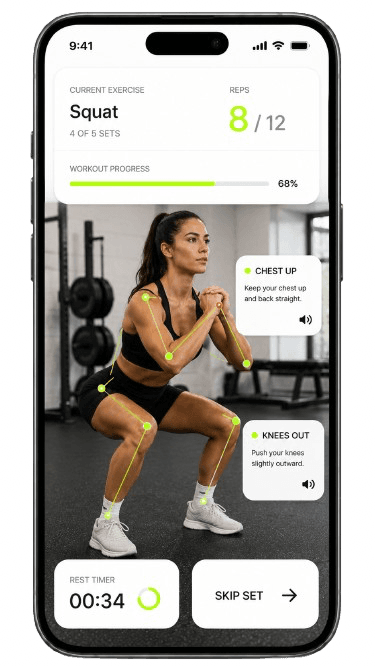

Direct answer: If your heels rise during a squat, first notice when it happens, whether it affects one or both feet, and whether a lighter load changes it. Heel lift can reflect a mix of balance, stance, footwear, depth, load position, and available ankle motion. A video can show that the heel moved; it cannot identify the cause by itself.
First, locate the moment
If it is comfortable, film a few bodyweight or light repetitions from the side with both shoes visible. Does the heel lift as you start down, only near the bottom, or as you stand? Does it happen on both feet? Does it appear only late in the set? These observations narrow the question without labeling yourself as tight or immobile.
Squat mechanics involve interacting factors, including stance, trunk inclination, and depth (assessment review). A forward-moving knee or a particular torso angle alone does not diagnose a problem. People also differ in proportions, exercise variation, and goals.
Try one adjustment at a time
Use a comfortable stance. If your feet feel constrained, test a small change in width or toe angle, keeping the whole foot in contact and letting the knees move generally in the direction of the toes. Do not copy someone else’s stance as a universal rule.
Temporarily reduce the depth or load if that helps you stay balanced and controlled. A comfortable range is more useful than forcing a deeper position while the heel rises or symptoms appear. You can also try a light counterbalance held in front as a drill; success with the drill does not prove a particular mobility issue.
Compare footwear and load separately. Soft or unstable shoes, a different bar position, or a heavier load can change how a squat feels. If you experiment with a wedge or heel-elevated shoe, understand that it changes the task and may help some people feel comfortable; it does not diagnose or fix the reason your heel lifted. Do not treat an online mobility test as a prescription.
For example, if your heels stay down for three light reps but rise on the last two of a heavier set, first test a slightly lighter load or end the set earlier. If they lift from the first rep, note your stance and comfort before adding exercises aimed at one presumed cause. Repeat under similar conditions and change only one variable so the comparison means something.
Use a video as evidence, not a verdict
A level side view can show whether the heel visibly separates from the floor and approximately when. A front view may add context about symmetry but is less useful for the timing of heel contact. One camera angle hides other details, and a tilted phone can create a misleading impression. Video is useful for reporting what happened, not for determining why.
If there is pain, do not push through it to meet a visual target. Stop if the movement is painful or causes unusual symptoms. Talk with a clinician if heel lift is painful, persistent, or accompanied by symptoms that concern you; a qualified strength coach can help with individualized technique in the context of your training. This is especially important after injury or when returning to exercise.
When Boddy may help
Boddy’s supported squat check can offer a camera-based cue about visible movement when the phone has a clear view. It cannot assess internal structures, diagnose ankle mobility, or know your injury history. An app cue is a reason to inspect a repetition—not a reason to ignore pain. See the existing guide to squat depth and stance app feedback for the different question of what on-screen exercise cues can cover.
Try Boddy’s live squat form check with a comfortable range and manageable load. Follow the app’s camera prompts, and stop if discomfort or symptoms appear. Download Boddy on the App Store if you want camera cues alongside a workout plan and progress record. For a diagnosis or rehabilitation plan, work with an appropriately qualified clinician.
Sources: Swinton et al., squat assessment review; squat biomechanics review; Boddy camera guidance.
BODDY IN ACTION
Real-time coaching on the iPhone you already use.
Boddy follows supported movement, counts repetitions, and delivers concise visual and spoken cues during the set.
TRAIN WITH BODDY
Want coaching that responds while you train?
Boddy combines personalized plans, meal logging, progress tracking, and real-time form guidance in one iPhone experience.