
THE BODDY JOURNAL
What Does a Workout Strength Score Actually Measure?
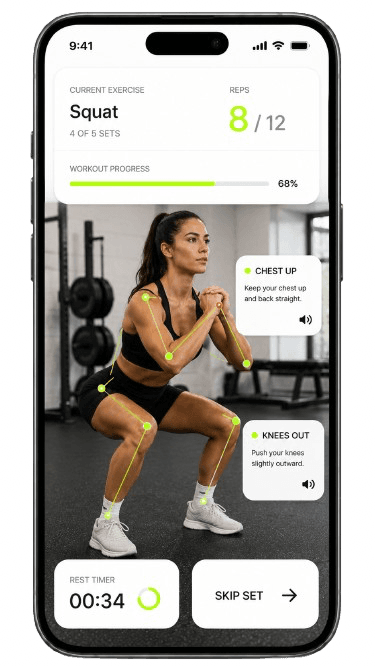
BODDY IN ACTION
Real-time coaching on the iPhone you already use.
Boddy follows supported movement, counts repetitions, and delivers concise visual and spoken cues during the set.

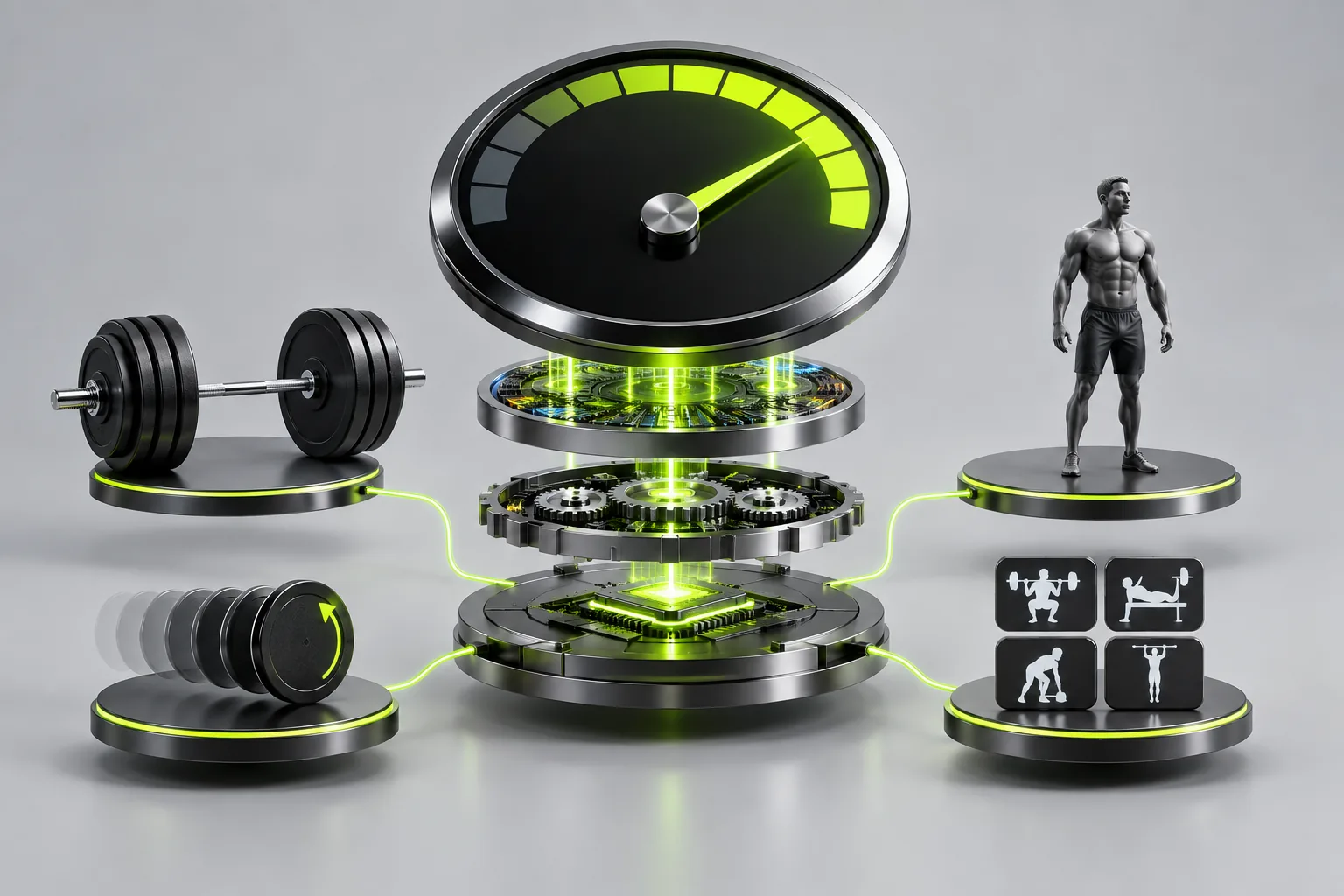
Direct answer: A strength score is an app-specific summary built from logged exercises, estimated maximums, body weight, or population comparisons. It is not a universal measurement, and it can change because the exercise mix or formula changed rather than because you gained or lost strength.
The complaint behind the question
Users become confused when a score falls after a good workout, ignores an important lift, rewards unfamiliar exercises, or compares machine loads as if every gym were identical. The polished number hides modeling choices.
Why this happens
Summaries compress detail. Estimated one-rep max formulas depend on rep range and effort; exercise selection creates coverage gaps; normalization by body weight changes interpretation. Without a published method, the score is best treated as a trend inside one system.
A five-point quality check
- The app explains which lifts contribute.
- Machine and free-weight histories remain distinct.
- One unusual set cannot dominate the result.
- The same formula is used across the comparison period.
- You can inspect the underlying workouts.
A safer decision rule
Use the score to ask a question, then verify it with repeatable performance: similar technique, range of motion, equipment, and effort. Do not change an otherwise productive program merely to optimize a proprietary badge.
What good product behavior looks like
A strength score should show which exercises and recent sessions contributed to it, how it treats missing or edited sets, and when an equipment change breaks comparability. A single number that rises after a different machine or falls after a deload needs explanation before it guides training. Let users inspect the underlying loads, reps, and effort instead of using the score as a substitute for them. The metric is most useful as a trend with known limits, not a grade on the athlete.
Where Boddy fits
Boddy makes progress more actionable by keeping summaries connected to the workouts, supported movement guidance, recovery, meals, and habits that produced them. A user can look past a headline score and return to observable sessions instead of treating one number as a verdict. The summary remains useful because it points toward the next training decision and stays secondary to the underlying record.
Important limit. Estimated one-rep maximums become less reliable when the recorded set was far from maximum effort, used an unfamiliar machine, or changed technique. A proprietary score may also change without the vendor publishing its full formula. Treat it as an internal trend with known inputs, never as a clinical measure or a comparison with another app's number.
A quick test before you depend on the feature
Worked example. Your strength score drops after a week when you replaced a barbell squat with a machine squat. Before treating that as lost strength, check which lifts the score includes and whether it compares the two exercises as if their loads were interchangeable. Review the actual set history for a lift you repeated under similar conditions: reps, load, range of motion, and how hard it felt. If those are stable, the score change may reflect exercise selection or a formula update. Keep training decisions tied to the underlying sets, not to the badge alone.
Bottom line
Use the score to ask better questions about the underlying lifts. Do not mistake an opaque rating for measured strength.
Sources checked in September 2026
BODDY IN ACTION
Real-time coaching on the iPhone you already use.
Boddy follows supported movement, counts repetitions, and delivers concise visual and spoken cues during the set.
TRAIN WITH BODDY
Want coaching that responds while you train?
Boddy combines personalized plans, meal logging, progress tracking, and real-time form guidance in one iPhone experience.